
Skin care is not just a beauty concern. It is part of everyday health, comfort, and personal grooming, and men can experience everything from occasional breakouts to persistent redness, irritation, and changes in skin texture. Some concerns are influenced by shaving, while others are related to genetics, hormones, the environment, or underlying skin conditions.

Understanding the common skin problems in men can make it easier to choose suitable products and recognize when a concern needs professional attention. A shiny forehead, recurring razor bumps, or dry patches may seem like minor issues, but the right approach depends on what is causing them.
Whether you prefer a simple grooming routine or enjoy exploring men’s skincare products, you do not need a crowded bathroom shelf to care for your skin. Here are ten common concerns, practical ways to manage them, and signs that it may be time to consult a dermatologist.
Quick Answer: What Are the Common Skin Problems in Men?
The common skin problems in men include acne, razor bumps, ingrown hairs, oily skin, dry skin, eczema, rosacea, dandruff-related facial irritation, dark spots, and suspicious skin changes.
Shaving habits, genetics, hormones, age, climate, and skincare choices can all influence men’s skin. Some concerns can be managed with gentle cleansing, suitable moisturizers, sun protection, and improved shaving techniques, while others may require prescription treatment or a medical assessment.
A useful starting routine is simple: cleanse gently, moisturize, use sunscreen during the day, and avoid shaving practices that repeatedly irritate the skin. If a problem is persistent, painful, spreading, or changing, seek advice from a qualified healthcare professional rather than assuming it is a cosmetic issue.
1. Acne and Frequent Breakouts
Acne is one of the most familiar common skin problems in men. It can appear as blackheads, whiteheads, inflamed pimples, or deeper, painful spots, particularly on the face, chest, shoulders, and back.
Hormonal activity, excess oil, clogged pores, and inflammation all play a role in acne. Some men also notice breakouts around areas covered by sports equipment, tight clothing, or products that do not suit their skin.
Why it happens: Acne is not simply a result of poor hygiene. Scrubbing harder or washing repeatedly will not necessarily clear it and may make irritation worse.
What may help:
- Cleanse gently: Wash your face with a mild cleanser, especially after sweating.
- Choose suitable products: Look for products labeled non-comedogenic if you are prone to clogged pores.
- Consider targeted ingredients: Salicylic acid or benzoyl peroxide may help some types of acne. Introduce products carefully and follow their instructions.
- Avoid picking: Squeezing spots can increase inflammation and the risk of scarring.
- Be patient: Acne treatments often need consistent use over several weeks.
The American Academy of Dermatology’s acne guidance explains common treatment approaches and why a suitable routine matters. If acne is deep, painful, persistent, or leaving scars, a dermatologist can recommend more effective treatment options.
2. Razor Bumps and Shaving Irritation
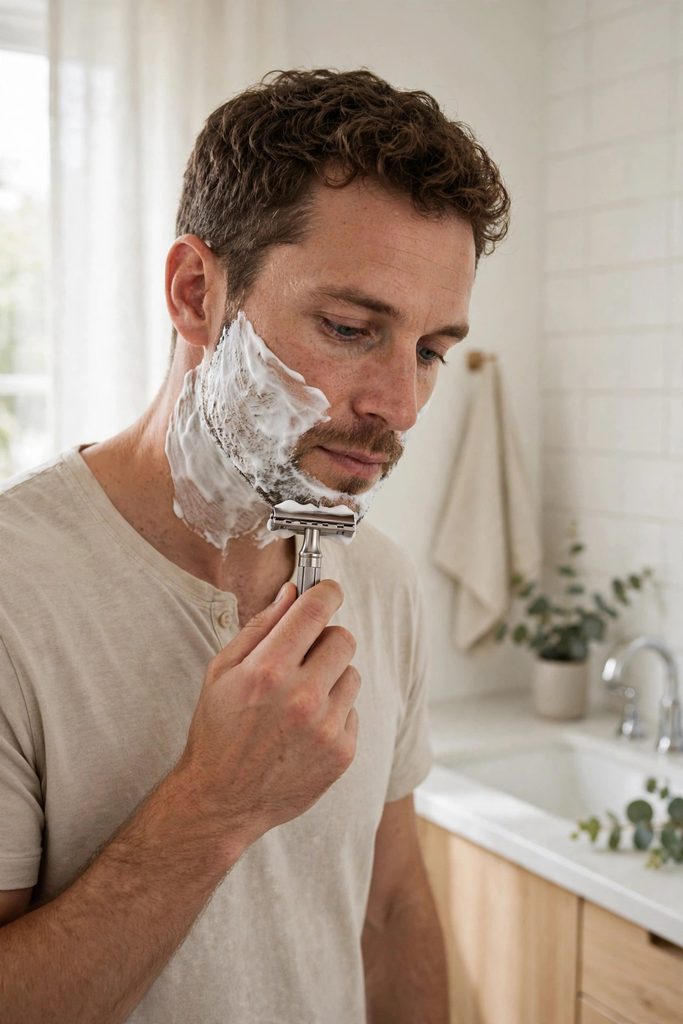
Shaving can leave the skin feeling smooth, but it can also cause redness, small bumps, itching, and discomfort. Razor bumps are particularly common in areas where hair is coarse or curly, including the beard and neck.
Razor bumps can develop when shaved hairs curve back toward the skin or grow into it. They are sometimes confused with ordinary acne, although the causes and management can differ.
Why it happens: Shaving too closely, stretching the skin, using a dull blade, or shaving against the direction of hair growth can increase irritation and the likelihood of ingrown hairs.
What may help:
- Prepare the skin: Wet your beard with warm water before shaving.
- Use shaving cream: Choose a moisturizing shaving product and avoid dry shaving.
- Follow hair growth: Shave in the direction your hair grows.
- Use light pressure: Avoid repeatedly passing the razor over the same area.
- Maintain your equipment: Use a clean, sharp blade and replace it when it becomes dull.
- Consider alternatives: An electric trimmer that leaves a little hair length may be more comfortable for some people.
The American Academy of Dermatology’s advice on razor bumps offers additional shaving guidance. If bumps are painful, infected-looking, or persistent, seek medical advice.
3. Ingrown Hairs
Ingrown hairs are another of the common skin problems in men, particularly for those who shave frequently. They occur when a hair grows back into the skin or becomes trapped beneath its surface.
They may look like small raised bumps and can sometimes cause itching, tenderness, or visible inflammation. The beard, neck, and jawline are frequent trouble spots.
Why it happens: Very close shaving, curly hair, and certain hair-removal techniques can make ingrown hairs more likely.
What may help:
- Avoid shaving too closely while the area is irritated.
- Use a warm compress to make the area more comfortable.
- Do not dig into the skin with tweezers or sharp objects.
- Give the affected area time to settle before shaving again.
- Consider a trimmer or a different hair-removal method if the problem keeps returning.
Avoid squeezing or forcefully removing a trapped hair. If the area becomes increasingly painful, warm, swollen, or produces pus, have it assessed by a healthcare professional.
4. Oily Skin and Enlarged-Looking Pores
A shiny forehead or nose is a common grooming concern. Men may notice oiliness across the forehead, nose, cheeks, or chin, although the amount of oil produced varies from person to person.
Oil, also known as sebum, helps protect the skin. The issue is not that all oil is bad, but that excess shine can be uncomfortable and may accompany clogged pores or acne.
Why it happens: Genetics, hormones, climate, and skincare choices can influence oil production. Hot and humid weather may also make shine more noticeable.
What may help:
- Use a gentle cleanser: Wash morning and evening, and after heavy sweating.
- Avoid harsh scrubs: Aggressive washing can irritate your skin.
- Choose lightweight moisturizer: Oily skin still benefits from hydration.
- Look for non-comedogenic formulas: These are designed not to clog pores.
- Use blotting paper: It can help absorb surface oil during the day without repeated washing.
A matte-finish sunscreen or lightweight gel moisturizer may suit men who dislike a greasy feeling. However, avoid trying to remove every trace of natural oil, as this can leave skin uncomfortable.
5. Dry, Flaky, or Tight Skin
Dry skin can affect men of every age and may become more noticeable during colder weather, in air-conditioned environments, or after frequent hot showers. Common symptoms include rough texture, flaking, tightness, and itching.
It can also develop when cleansing products are too harsh or when shaving repeatedly irritates the same area.
Why it happens: Skin may lose moisture because of environmental conditions, frequent washing, certain products, age, or an underlying skin condition.
What may help:
- Choose a gentle cleanser: Avoid products that leave your skin feeling tight.
- Use warm water: Very hot showers can worsen dryness.
- Moisturize regularly: Apply cream or lotion after washing.
- Consider richer formulas: Creams and ointments may be more suitable for very dry areas.
- Protect exposed skin: Cold wind and dry air can make discomfort worse.
If dryness is persistent, severely itchy, cracked, or accompanied by a rash, consider getting it checked. It may be related to eczema or another condition rather than ordinary dryness.
6. Eczema and Persistent Itching
Eczema is a group of conditions that can cause dry, itchy, inflamed skin. Atopic dermatitis is a common type, and it can affect the hands, face, neck, elbows, knees, and other areas.
Among the common skin problems in men, eczema can be particularly frustrating because scratching may temporarily feel relieving but can further irritate the skin. Symptoms may come and go, with periods of improvement followed by flare-ups.
Why it happens: Eczema is associated with a combination of skin-barrier differences, immune-system activity, genetics, and environmental factors. It is not simply caused by being unclean.
What may help:
- Moisturize consistently: Use a fragrance-free cream or ointment.
- Avoid known triggers: Fragrances, harsh detergents, and certain fabrics may bother some people.
- Keep showers gentle: Use lukewarm water and avoid excessive washing.
- Avoid scratching: Keep nails short and try a cool compress for temporary comfort.
- Follow treatment advice: A healthcare professional may recommend specific creams or other treatments.
Eczema can resemble other skin conditions, so recurring or widespread symptoms deserve professional assessment. Seek help if the skin becomes painful, develops blisters, or shows signs of infection.
7. Rosacea and Persistent Facial Redness
Rosacea is a long-term skin condition that commonly affects the central face, including the cheeks, nose, forehead, and chin. It can cause persistent redness, visible small blood vessels, flushing, and acne-like bumps.
It is sometimes mistaken for ordinary acne or sensitivity. However, using strong acne products without understanding the cause may make facial irritation worse.
Why it happens: The exact cause of rosacea is not fully understood. Symptoms can be influenced by individual triggers, which may include sunlight, heat, spicy foods, alcohol, or certain skincare products.
What may help:
- Identify personal triggers: Keep a simple record of what seems to make redness worse.
- Use gentle products: Choose fragrance-free cleansers and moisturizers.
- Apply sunscreen: Protect your face from UV exposure.
- Avoid aggressive exfoliation: Strong scrubs and irritating products may aggravate symptoms.
- Seek a diagnosis: A dermatologist can distinguish rosacea from acne and other causes of redness.
The NHS guide to rosacea explains its symptoms and treatment options. If facial redness is persistent or accompanied by eye irritation, arrange a medical assessment.
8. Dandruff and Facial Flaking
Dandruff is usually associated with the scalp, but some men also experience flaking around the eyebrows, sides of the nose, beard, ears, or hairline. When these areas become red or greasy as well as flaky, seborrheic dermatitis may be involved.
This condition can be mistaken for simple dry skin. However, applying a heavy moisturizer alone may not address the underlying cause.
Why it happens: Seborrheic dermatitis is associated with an inflammatory response involving skin oils and a naturally occurring yeast on the skin. Its symptoms can fluctuate over time.
What may help:
- Use appropriate scalp care: An anti-dandruff shampoo may help scalp symptoms.
- Clean facial hair gently: Wash the beard area without scrubbing.
- Avoid irritating products: Strong fragrances and harsh cleansers may worsen discomfort.
- Follow product directions: Some medicated products are intended for specific areas and should not automatically be used on the face.
- Ask for advice: A pharmacist or dermatologist can suggest suitable treatment.
If flaking is persistent, spreads, or does not improve with basic care, seek an assessment to confirm the cause.
9. Dark Spots and Uneven Skin Tone
Dark spots can develop after inflammation, acne, skin irritation, or sun exposure. Some men notice marks left behind after shaving bumps or blemishes, particularly on the cheeks, jawline, and neck.
These marks are not always the same as scars. Post-inflammatory hyperpigmentation refers to darker areas that can remain after the original irritation or inflammation has settled.
Why it happens: Skin can produce extra pigment in response to inflammation or UV exposure. The likelihood and appearance of dark marks vary with individual skin characteristics.
What may help:
- Use sunscreen: Daily sun protection can help prevent existing dark marks from becoming more noticeable.
- Avoid picking: Scratching or squeezing spots can increase the risk of lingering marks.
- Choose gentle products: Avoid harsh treatments that cause additional irritation.
- Consider targeted skincare: Ingredients such as azelaic acid or niacinamide may be useful for some people, depending on the concern and product formulation.
- Seek professional advice: A dermatologist can help identify the type of pigmentation and suitable treatment.
Do not assume every dark spot is harmless pigmentation. A spot that changes in size, shape, or color should be assessed.
10. Suspicious Moles and Other Skin Changes
Not every skin concern is a cosmetic issue. New or changing moles, unusual growths, and sores that do not heal can sometimes be signs of skin cancer.
Skin cancer can affect people with all skin tones. It may appear on areas that receive regular sun exposure, but it can also develop in less obvious places.
Why it matters: Early assessment of a suspicious change is important. Waiting for a spot to become painful or uncomfortable is not a reliable way to judge whether it needs attention.
Look out for the ABCDE warning signs of melanoma:
- A, Asymmetry: One half does not match the other.
- B, Border: The edges are irregular, blurred, or uneven.
- C, Color: The spot has different or changing colors.
- D, Diameter: The spot is often larger than 6 millimeters, although melanomas can be smaller.
- E, Evolving: The mole or spot changes in size, shape, color, or appearance.
These signs are a guide, not a diagnosis. If you notice a new or changing spot, arrange an assessment with a healthcare professional.
Common Skin Problems in Men: Symptoms and Care at a Glance
The following table can help you compare common concerns, but it should not be used to diagnose a condition.
| Skin concern | Common signs | Helpful first step |
|---|---|---|
| Acne | Blackheads, whiteheads, pimples | Gentle cleansing and suitable acne care |
| Razor bumps | Raised bumps after shaving | Adjust shaving technique |
| Ingrown hairs | Trapped hairs and small bumps | Avoid close shaving and picking |
| Oily skin | Shine and visible pores | Gentle cleanser and lightweight moisturizer |
| Dry skin | Tightness, roughness, flaking | Regular moisturizing |
| Eczema | Itchy, inflamed patches | Fragrance-free moisturizer and professional advice |
| Rosacea | Facial redness and flushing | Gentle care and trigger awareness |
| Seborrheic dermatitis | Flaking around scalp, beard, or nose | Appropriate anti-dandruff treatment |
| Dark spots | Areas of increased pigmentation | Sun protection and gentle skincare |
| Suspicious skin changes | New or changing spots | Professional skin assessment |
A Simple Daily Skincare Routine for Men

You do not need separate products for every concern. A straightforward routine can help support the skin barrier and make grooming easier to maintain.
| Morning | Evening |
|---|---|
| Cleanse gently if needed | Remove sunscreen and daily buildup |
| Apply moisturizer | Cleanse with a mild product |
| Apply broad-spectrum SPF 30 or higher | Apply moisturizer |
| Shave carefully if preferred | Use targeted treatments as directed |
A few practical guidelines can help you choose products:
- For oily skin: Try lightweight, non-comedogenic moisturizers.
- For dry skin: Consider richer creams with moisturizing ingredients.
- For sensitive skin: Look for fragrance-free products and introduce new formulas gradually.
- For acne-prone skin: Avoid heavy products that tend to clog pores.
- For shaving concerns: Choose a suitable shaving cream and keep blades clean and sharp.
Avoid starting several active skincare products at once. If irritation develops, stop the newest product and consider professional advice if symptoms persist.
When to See a Professional
Many mild skin concerns can be managed with consistent daily care, but not every problem should be treated at home. A dermatologist can help identify the cause and recommend treatment based on your skin and symptoms.
Arrange a professional assessment if you experience:
- Acne that is painful, severe, persistent, or leaving scars.
- Repeated razor bumps with swelling or possible infection.
- Eczema-like patches that are widespread or difficult to control.
- Facial redness that persists or affects your eyes.
- A rash that spreads, becomes painful, or does not improve.
- A new or changing mole, a bleeding spot, or a sore that does not heal.
Seek prompt medical attention if a skin problem develops rapidly, becomes severely painful, or is accompanied by fever or other signs of a significant infection.
Frequently Asked Questions
1. What are the most common skin problems in men?
The common skin problems in men include acne, razor bumps, ingrown hairs, oily skin, dryness, eczema, rosacea, dandruff-related facial irritation, dark spots, and suspicious moles. The most frequent concerns vary with age, skin type, grooming habits, and environment.
2. Why do men get razor bumps so often?
Razor bumps can develop when shaved hairs curve back into the skin or become trapped beneath its surface. Close shaving, shaving against hair growth, and repeated razor strokes can increase the likelihood of irritation, particularly for men with curly or coarse beard hair.
3. How can men improve acne-prone skin?
Start with gentle cleansing, a suitable moisturizer, and products designed for acne-prone skin. Ingredients such as salicylic acid or benzoyl peroxide may help some people, but persistent, painful, or scarring acne should be assessed by a dermatologist.
4. Should men use moisturizer if they have oily skin?
Yes. Oily skin can still benefit from moisturizing. A lightweight, non-comedogenic formula may help keep skin comfortable without adding an unnecessarily heavy or greasy feel.
5. Are men’s skin problems different from women’s?
Many skin conditions affect people of all genders, including acne, eczema, rosacea, and skin cancer. However, differences in facial hair, shaving frequency, hormones, and grooming practices can influence how certain concerns appear or are managed.
6. What is the best skincare routine for men?
A practical routine includes gentle cleansing, moisturizing, and daytime sunscreen. Men who shave can also benefit from using suitable shaving products, following hair growth, and avoiding repeated strokes over irritated areas.
7. When should men see a dermatologist for a skin problem?
See a dermatologist if a skin concern is persistent, painful, spreading, repeatedly returning, or leaving scars. New or changing moles, unusual growths, and sores that do not heal should also be professionally assessed.
Conclusion: Manage Common Skin Problems in Men With Consistent Care
The common skin problems in men range from everyday grooming concerns, such as razor bumps and oily skin, to conditions that may need medical treatment, including eczema, rosacea, and suspicious skin changes.
The most useful approach is to understand what your skin is experiencing instead of treating every bump, rash, or dark spot in the same way. Gentle cleansing, suitable moisturizing, careful shaving, and consistent sun protection provide a practical foundation for many men’s routines.
Start with the concern that affects you most, make one manageable change at a time, and seek professional advice when symptoms persist or look unusual. Good skincare is not about achieving flawless skin. It is about keeping your skin comfortable, protecting its health, and finding a routine you can maintain.
More about : Men’s Skin Concerns & Solutions: A Barrier-First Approach for Lasting Comfort
You may also like
-
Men’s Skin Concerns & Solutions: A Barrier-First Approach for Lasting Comfort
-
Men’s Skin Concerns & Solutions: A Barrier-First Approach for Lasting Comfort
-
Men’s Skin Concerns & Solutions: A Beginner’s Guide to Healthier Skin This Week
-
Men’s Skin Concerns & Solutions: A Barrier-First Approach for Lasting Comfort
-
Men’s Skin Concerns & Solutions: A Barrier-First Routine for Lasting Comfort