
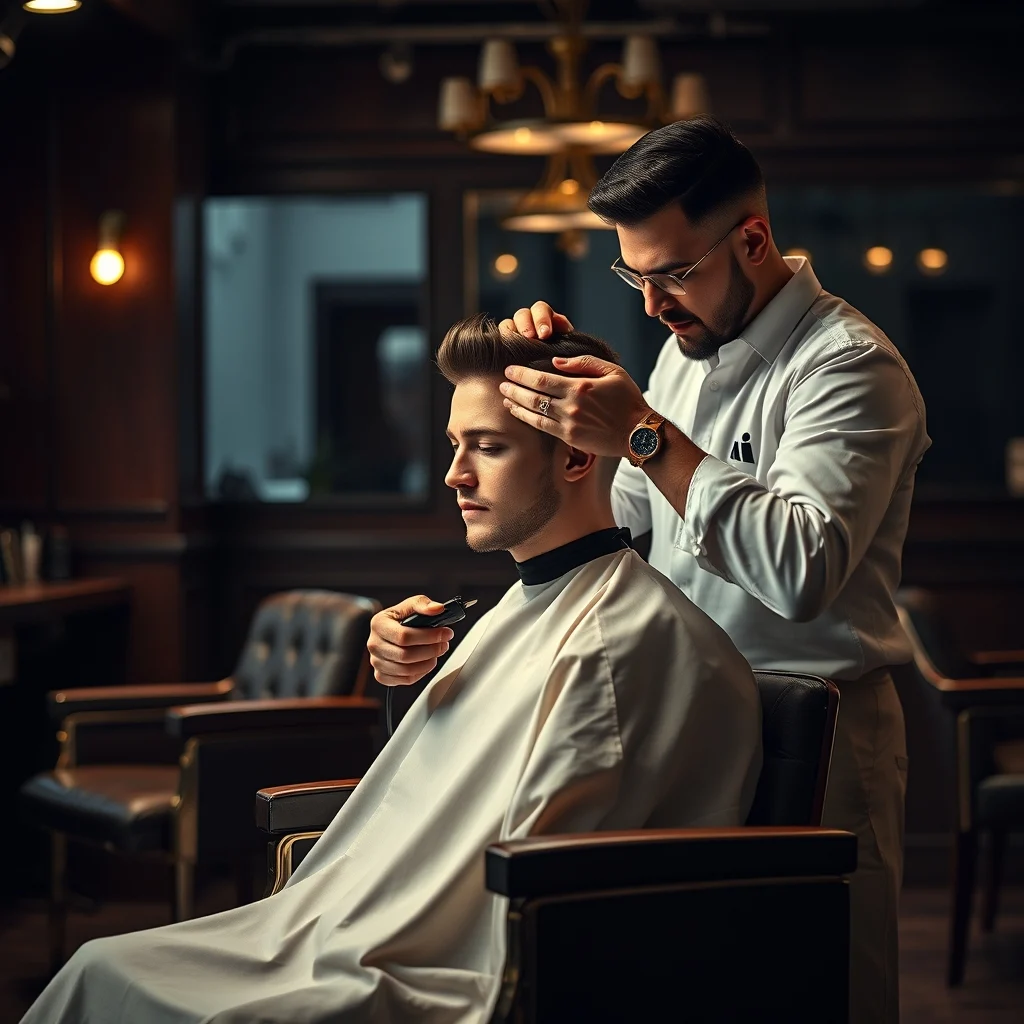
In 2024, modern gentleman barbering has transcended its traditional roots to become a cornerstone of masculine self-care, blending artistry, precision, and luxury. This evolution reflects broader cultural shifts, where grooming is no longer a utilitarian task but a ritual of identity, confidence, and social signaling. Barbershops have transformed into experiential hubs, offering services that range from precision mens haircuts to premium beard shaping, catering to a clientele that demands both technical excellence and personalized attention. The industry’s growth is driven by a confluence of factors: rising disposable incomes, the influence of social media, and a generational redefinition of masculinity that embraces vulnerability and self-expression.
The current landscape of mens premium grooming is defined by its dual focus on tradition and innovation. While classic techniques like the straight-razor shave remain revered, they now coexist with advanced methodologies such as laser-guided hair design and AI-driven styling consultations. This hybrid approach has expanded the market’s reach, attracting demographics from urban professionals to Gen Z influencers. According to a 2023 report by Grand View Research, the global men’s grooming market is projected to reach $115 billion by 2028, with barbershops accounting for nearly 30% of the revenue. The surge is particularly pronounced in metropolitan areas, where establishments like New York’s The Gents Place and London’s Murray’s have redefined luxury barbering by integrating spa-like amenities with bespoke styling services.
The Historical Trajectory of Modern Gentleman Barbering
The foundations of contemporary barbering were laid in the 19th century, when barbershops served as communal spaces for men to socialize, network, and receive grooming services. The introduction of the safety razor in 1901 by King C. Gillette democratized shaving, shifting the industry’s focus from barbers to at-home grooming. However, the mid-20th century saw a decline in barbershop culture as unisex salons gained popularity, and men’s grooming became less ritualized. The resurgence began in the early 2000s, fueled by three key developments:
- 2005-2010: The rise of the “metrosexual” aesthetic, popularized by figures like David Beckham, normalized men’s investment in skincare and styling. Brands like Axe and Dove Men+Care capitalized on this trend, expanding the market for grooming products.
- 2010-2015: The proliferation of social media platforms, particularly Instagram, turned barbers into influencers. Viral trends like the sharp fade techniques and sculpted beard craft became hallmarks of modern masculinity, with barbers like @the_real_benjamin_bratton amassing millions of followers.
- 2016-Present: The institutionalization of barbering as a craft. Organizations such as the American Barber Association and the UK’s British Barbering Association established certification programs, elevating the profession’s credibility. The COVID-19 pandemic further accelerated demand, as men sought professional grooming services to maintain a polished appearance during remote work.
Operational Mechanics: How Modern Barbering Works
At the heart of modern gentleman barbering is a commitment to precision and personalization. Unlike traditional barbershops, which often relied on standardized cuts, today’s establishments employ a consultative approach. Clients undergo a pre-service analysis, where stylists assess factors such as face shape, hair texture, and lifestyle to recommend tailored solutions. This process is supported by technological tools, including:
- 3D Hair Scanning: Devices like the HairMetrix system use AI to analyze hair density and growth patterns, enabling stylists to design cuts that complement natural features.
- Virtual Try-Ons: Augmented reality apps, such as ModiFace, allow clients to preview styles before committing to a cut.
- Automated Grooming Stations: High-end barbershops now feature stations equipped with touchless faucets, UV sterilization, and climate-controlled environments to enhance hygiene and comfort.
Services are categorized into three tiers, each catering to distinct consumer needs:
| Tier | Service Examples | Price Range (USD) | Target Demographic |
|---|---|---|---|
| Basic | Standard haircuts, beard trims, hot towel shaves | $30-$70 | Budget-conscious consumers, students |
| Premium | Precision mens haircuts, premium beard shaping, scalp treatments | $80-$150 | Urban professionals, millennials |
| Luxury | Alpha grooming rituals, bespoke styling, VIP memberships | $200+ | High-net-worth individuals, celebrities |
“The modern barbershop is less about the haircut and more about the experience,” says Mark Bustos, a celebrity barber and founder of Three’s Barbershop in New York. “Clients want to feel like they’re part of an exclusive community. That’s why we’ve integrated amenities like whiskey bars, cigar lounges, and even co-working spaces into our shops.”
Quantitative Data: Market Trends and Consumer Behavior
The mens premium grooming industry’s expansion is underpinned by robust data. A 2023 survey by Statista revealed that 68% of men aged 18-34 visit a barbershop at least once a month, compared to 42% in 2015. The frequency of visits correlates with income levels, as shown in the table below:
| Income Bracket (USD) | Average Visits per Month | Primary Services Requested |
|---|---|---|
| $30,000-$50,000 | 0.8 | Basic haircuts, beard trims |
| $50,000-$100,000 | 1.5 | Precision mens haircuts, hot towel shaves |
| $100,000+ | 2.3 | Alpha grooming rituals, bespoke styling |
Geographically, the market exhibits significant regional variation. North America leads with a 38% share of global revenue, followed by Europe (29%) and Asia-Pacific (22%). The Asia-Pacific region is the fastest-growing, with a compound annual growth rate (CAGR) of 8.2% from 2023 to 2028, driven by urbanization and the adoption of Western grooming standards. In contrast, Europe’s market is characterized by a revival of traditional mens grooming techniques, with cities like Berlin and Paris witnessing a resurgence of old-school barbershops.
“The European market is unique because it blends heritage with innovation,” notes Sophie Laurent, a grooming industry analyst at Euromonitor International. “Barbershops here are not just service providers; they’re cultural institutions. The demand for classic mens shave services has surged by 40% in the last three years, as younger generations seek to reconnect with pre-digital traditions.”
Systemic Impacts: Cultural, Economic, and Social Dimensions
The rise of modern gentleman barbering has had far-reaching implications beyond the grooming industry. Culturally, it has redefined masculinity, challenging stereotypes that equate self-care with femininity. A 2022 study by the Journal of Consumer Culture found that men who frequent barbershops report higher levels of self-esteem and social confidence, attributing this to the communal and ritualistic aspects of the experience. The study also highlighted the role of barbershops as safe spaces for men to discuss mental health, with 56% of respondents indicating they had engaged in such conversations with their barbers.
Economically, the industry has become a significant job creator. The U.S. Bureau of Labor Statistics projects a 19% growth in barber employment from 2022 to 2032, outpacing the average for all occupations. This growth has spurred the development of vocational programs, such as the Barbering Academy at Paul Mitchell Schools, which offers specialized training in masculine hair design and elite barbershop craft. However, the industry also faces challenges, including wage disparities and the precarious nature of gig-based grooming services. A 2023 report by the National Association of Barber Boards of America revealed that 45% of barbers earn less than $30,000 annually, despite working an average of 50 hours per week.
Socially, barbershops have emerged as hubs for community engagement. Initiatives like Barbershop Books, a literacy program founded by Alvin Irby, leverage the barbershop environment to promote reading among young boys. Similarly, organizations like Cut It Out train barbers to recognize signs of domestic abuse and provide resources to clients. “Barbers are often the first point of contact for men in crisis,” says Irby. “Our goal is to equip them with the tools to offer more than just a haircut.”
Stakeholder Perspectives: Conflicts and Consensus
The modern gentleman barbering industry is shaped by diverse stakeholders, each with distinct priorities and concerns. These perspectives often collide, particularly around issues of regulation, innovation, and cultural authenticity.
Barbers and Stylists: Many barbers advocate for stricter licensing requirements to professionalize the industry. “There’s a misconception that anyone can pick up a pair of clippers and call themselves a barber,” says Javier Rivera, a master barber and educator at the American Barber Academy. “This undermines the craft and puts clients at risk.” However, others resist regulation, arguing that it stifles creativity and limits access to the profession. The debate is particularly contentious in states like California, where proposed legislation would mandate 1,500 hours of training for licensure, up from the current 1,000.
Consumers: Client expectations vary widely. While some prioritize convenience and affordability, others seek exclusivity and customization. A 2023 survey by Grooming Insider found that 72% of men aged 25-40 are willing to pay a premium for tailored mens styling, but only if the service includes personalized consultations and follow-up care. “I don’t just want a haircut; I want a relationship with my barber,” says Daniel Carter, a 32-year-old marketing executive. “If I’m paying $100, I expect them to remember my preferences and offer advice on maintaining my style.”
Industry Leaders: Executives at grooming brands and barbershop chains emphasize the need for scalability. “The challenge is balancing artistry with profitability,” says Sarah Johnson, CEO of Gents Brand Holdings, which operates over 200 barbershops across North America. “We’re investing in technology to streamline operations, but we can’t lose the human touch that defines our industry.” This tension is evident in the rise of franchised barbershops, which offer consistency but are often criticized for lacking authenticity.
Regulators: Government agencies are grappling with how to oversee an industry that blends healthcare, personal care, and hospitality. The U.S. Food and Drug Administration (FDA) has yet to establish guidelines for grooming products marketed as “premium” or “luxury,” leading to concerns about misleading claims. Meanwhile, local health departments are cracking down on sanitation violations, with cities like New York issuing fines to barbershops that fail to meet hygiene standards. “The regulatory landscape is fragmented,” says Dr. Lisa Chen, a public health expert at the Centers for Disease Control and Prevention. “We need a unified approach to ensure consumer safety without stifling innovation.”
The future of modern gentleman barbering hinges on the industry’s ability to navigate these competing interests. Upcoming regulatory milestones, such as the FDA’s review of grooming product labeling in 2025, could reshape market dynamics. Meanwhile, technological advancements like AI-driven styling tools and virtual reality consultations are poised to redefine the client experience. As the industry evolves, one constant remains: the barbershop’s role as a nexus of culture, community, and craftsmanship. For men seeking more than a haircut, it offers a space to refine their identity, one precision mens haircut at a time.
You may also like
-
The Multidimensional Framework of **Precision Mens Haircut**: A Data-Driven Analysis of Artistry, Industry Evolution, and Consumer Demand in 2024
-
The Systematic Advancement of Premium Barbering Tools: A Multidimensional Analysis of Innovation, Industry Standards, and Consumer Demand
-
The Groomed Mind: Behavioral Science, Societal Feedback, and the Strategic Calibration of Men’s Confidence and Presentation Across Contexts
-
The Comprehensive Framework of **Alpha Grooming Rituals**: Industry Standards, Technological Integration, and the Cultural Shift Toward Masculine Self-Care in 2024
-
The Strategic Blueprint of Men’s Wardrobe Intentionality: A Multidimensional Analysis of Style, Confidence, and Societal Perception in Modern Contexts