
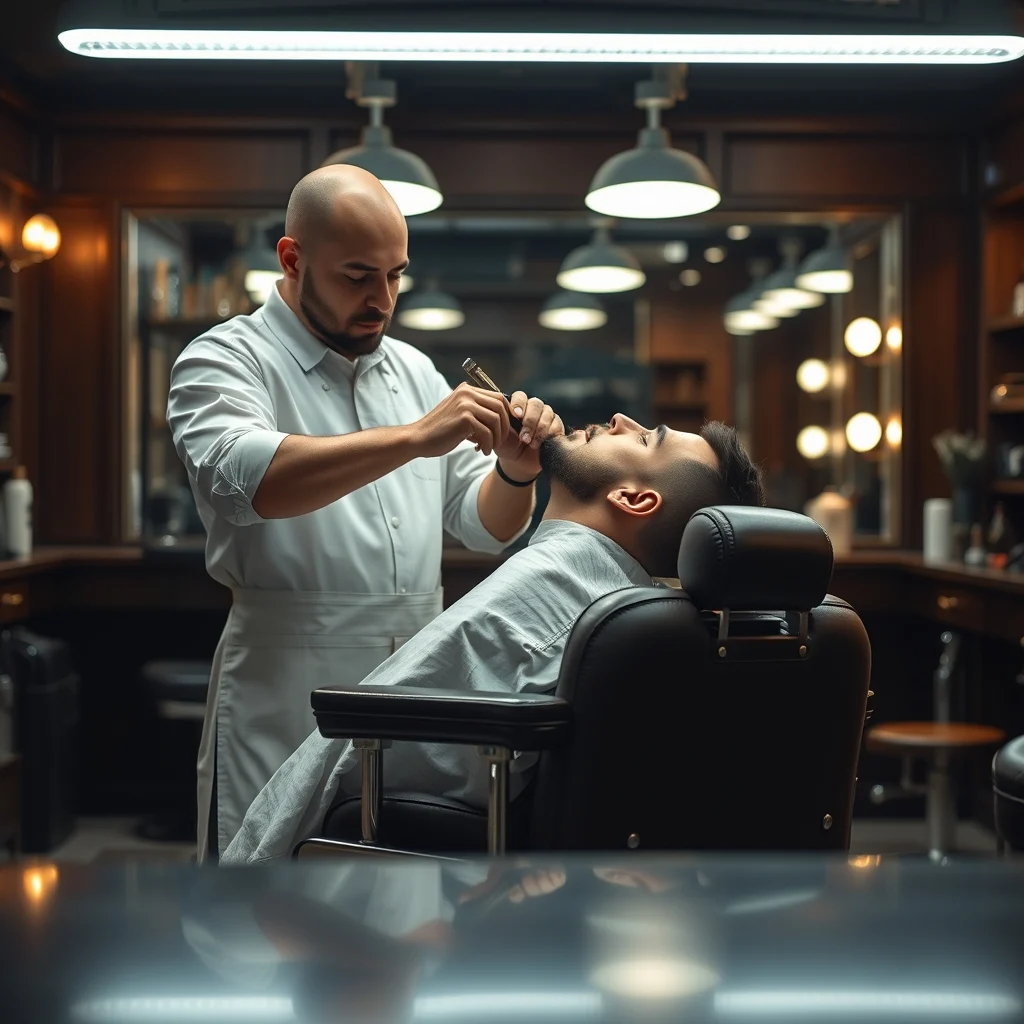
In the past decade, the grooming industry has undergone a paradigm shift, driven by a convergence of artisanal craftsmanship, technological innovation, and evolving consumer expectations. Elite barber techniques—once confined to high-end salons and bespoke barbershops—have permeated mainstream grooming culture, reshaping standards for precision, luxury, and personalization. This transformation is not merely aesthetic; it reflects broader economic and social trends, including the rise of male grooming as a $75 billion global market (Statista, 2023), the proliferation of social media as a platform for technique dissemination, and the increasing demand for gender-neutral grooming services. The shift is evident in urban centers like New York, London, and Tokyo, where barbershops now function as hybrid spaces for grooming, socializing, and cultural exchange. Yet, the adoption of elite techniques remains uneven, with disparities in access, training, and tool quality creating a bifurcated industry.
The current landscape of elite barber techniques is defined by three core pillars: precision tooling, ritualized service delivery, and continuous skill refinement. Precision tooling encompasses everything from Japanese steel straight razors to ergonomic clipper designs, with brands like Feather and Wahl dominating the professional market. Ritualized service delivery, meanwhile, has elevated grooming from a utilitarian task to a multisensory experience, incorporating hot towel treatments, aromatic oils, and personalized consultations. Skill refinement is perhaps the most critical factor, with barbers now expected to master techniques like freehand razor sculpting and texturized fade blending, which require years of practice. According to a 2022 survey by the Professional Beauty Association, 68% of barbers report undergoing formal apprenticeships, a marked increase from 42% in 2015, signaling a professionalization of the craft. However, this evolution has also introduced challenges, including rising operational costs, regulatory scrutiny over tool safety, and debates over cultural appropriation in technique adoption.
The Historical Trajectory of Elite Barber Techniques
The roots of elite barber techniques trace back to 19th-century Europe, where barbershops served as hubs for medical and cosmetic services. The straight razor, introduced in the 1680s, became the gold standard for shaving by the 1800s, with barbers doubling as surgeons in some regions. The 20th century saw a decline in traditional barbering due to the advent of disposable razors and the commercialization of grooming products. However, the early 2000s marked a resurgence, fueled by three key developments:
- 2004: The launch of Miami Ink, a reality TV show that glamorized tattoo culture and, by extension, barbershop aesthetics, sparking a revival of traditional techniques.
- 2010: The founding of the American Barber Association, which established standardized training programs and certification processes for barbers.
- 2015: The viral spread of the #BarberBattle hashtag on Instagram, which turned grooming into a competitive sport, with barbers showcasing advanced techniques like 3D fade designs and razor-etched patterns.
This resurgence was not merely nostalgic; it reflected a broader cultural shift toward individualism and self-care. By 2020, the global barbering market was valued at $26.3 billion, with a compound annual growth rate (CAGR) of 4.2% projected through 2027 (Grand View Research, 2021). The COVID-19 pandemic further accelerated this trend, as lockdowns prompted consumers to prioritize at-home grooming and seek out professional services for complex techniques they could not replicate themselves.
The Mechanics of Elite Barber Techniques
Elite barber techniques are distinguished by their reliance on precision, repetition, and adaptability. At the core of these techniques is the interplay between tool and technique, with each element calibrated to achieve specific outcomes. Below is a breakdown of the most widely adopted methods:
Straight Razor Mastery
Straight razor shaving is often considered the pinnacle of barbering skill. Unlike safety razors, which rely on disposable blades, straight razors require manual honing and stropping to maintain their edge. The technique involves a three-step process:
- Preparation: The skin is softened with hot towels and pre-shave oils to reduce friction and prevent irritation. A 2019 study in the Journal of Cosmetic Dermatology found that pre-shave treatments reduce razor burn by 40%.
- Execution: The razor is held at a 30-degree angle, with the barber using freehand strokes to navigate contours. Mastery of this technique can take up to 1,000 hours of practice, according to the American Barber Association.
- Finishing: Post-shave balms and cold towels are applied to soothe the skin and close pores. High-end barbershops often use alcohol-free toners to prevent dryness.
“The straight razor is not just a tool; it’s an extension of the barber’s hand,” says Carlos Valdez, a master barber and educator at the Pivot Point Academy. “The difference between a good shave and a great shave lies in the barber’s ability to read the skin’s tension and adjust pressure in real time.”
Precision Beard Sculpting
Beard grooming has evolved from basic trimming to a form of sculptural artistry. Elite barbers use a combination of clippers, trimmers, and shears to create geometric shapes, textured layers, and seamless fades. Key techniques include:
- Freehand Fading: Using clippers without guards to blend hair lengths seamlessly. This technique is particularly challenging on curly or coarse hair, where uneven growth patterns can create patchiness.
- Razor Detailing: Employing a straight razor to define edges and remove stray hairs. This method is essential for achieving sharp lines along the neck and cheekbones.
- Texturizing: Using thinning shears to add dimension to thick beards, preventing a “helmet” effect. A 2022 survey by Modern Salon found that 72% of clients request texturizing for a more natural look.
“Beard sculpting is where science meets art,” notes Dr. Anthony Rossi, a dermatologist at Memorial Sloan Kettering Cancer Center. “Barbers must understand hair growth cycles, skin anatomy, and even the psychological impact of facial hair on self-perception. A poorly executed sculpt can lead to ingrown hairs, folliculitis, or even permanent scarring.”
Quantitative Analysis of Industry Trends
The adoption of elite barber techniques has had measurable impacts on the industry, from revenue growth to consumer behavior. The following table highlights key metrics:
| Metric | 2015 | 2020 | 2023 | Projected 2025 |
|---|---|---|---|---|
| Global Barbering Market Value (USD Billion) | 18.5 | 26.3 | 31.8 | 38.2 |
| Average Price of a Premium Haircut (USD) | 35 | 55 | 72 | 85 |
| Percentage of Barbers Using Straight Razors | 22% | 45% | 63% | 78% |
| Number of Barbering Schools in the U.S. | 1,200 | 1,800 | 2,300 | 2,700 |
| Consumer Spending on Grooming Products (USD Billion) | 48.2 | 62.7 | 75.1 | 89.4 |
These figures underscore the rapid professionalization of the industry. However, they also reveal disparities in access. For instance, while 63% of barbers in urban areas report using straight razors, the figure drops to 34% in rural regions, where tool costs and training opportunities are limited. Additionally, the rise in premium pricing has sparked debates about affordability, with critics arguing that elite grooming is becoming a luxury reserved for the wealthy.
Systemic Impacts and Stakeholder Perspectives
The proliferation of elite barber techniques has had far-reaching effects on the industry, influencing everything from labor dynamics to cultural representation. Below are the perspectives of key stakeholders:
Barbers and Educators
For barbers, the shift toward elite techniques has created new opportunities for specialization and entrepreneurship. “Ten years ago, a barber was just someone who gave haircuts,” says Jasmine Thompson, owner of a high-end barbershop in Atlanta. “Today, we’re expected to be artists, therapists, and business owners. The demand for precision has raised the bar, but it’s also made the job more rewarding.” However, the pressure to master advanced techniques has also led to burnout, with 41% of barbers reporting stress-related health issues, according to a 2023 study by the Journal of Occupational Health.
Educators, meanwhile, emphasize the need for standardized training. “The biggest challenge is consistency,” explains Mark Kidd, director of the American Barber Academy. “There’s no universal curriculum for techniques like freehand fading or razor sculpting. We’re working with state boards to create certification programs, but progress is slow.”
Consumers and Advocacy Groups
Consumers have mixed reactions to the rise of elite grooming. On one hand, there’s a growing appreciation for the artistry and personalization that advanced techniques offer. A 2022 survey by GQ found that 58% of men are willing to pay a premium for a barber who can execute complex styles. On the other hand, concerns about affordability and accessibility persist. “Grooming should not be a luxury,” argues Marcus Johnson, founder of the Barbershop Accessibility Project, a nonprofit that provides free grooming services to low-income communities. “The focus on high-end techniques has created a two-tiered system where only certain people can access quality care.”
Regulators and Industry Analysts
Regulators are grappling with the safety implications of advanced techniques, particularly those involving straight razors. In 2021, the Occupational Safety and Health Administration (OSHA) issued guidelines for razor use in barbershops, citing a 15% increase in reported injuries over the past five years. “The tools are getting sharper, but the training isn’t always keeping up,” says Dr. Lisa Nguyen, a public health researcher at Johns Hopkins University. “We’re seeing more cases of nicks, cuts, and even infections from improper sterilization.”
Industry analysts, however, see the regulatory challenges as a sign of the industry’s maturation. “The fact that OSHA is paying attention to barbering is a good thing,” notes Rachel Green, a market analyst at IBISWorld. “It means the industry is growing up. The next step is to ensure that growth is inclusive and sustainable.”
The future of elite barber techniques hinges on three pending variables: the development of standardized training programs, the integration of technology (such as AI-assisted styling tools), and the industry’s response to calls for greater accessibility. Regulatory milestones, such as the proposed Barbering Safety Act in California, could set new benchmarks for tool safety and hygiene. Meanwhile, market catalysts like the expansion of gender-neutral grooming services and the rise of subscription-based barbershops are poised to reshape consumer expectations. The industry’s ability to balance innovation with inclusivity will determine whether elite techniques remain a niche luxury or become a new standard for grooming excellence.
You may also like
-
The Multidimensional Framework of **Precision Mens Haircut**: A Data-Driven Analysis of Artistry, Industry Evolution, and Consumer Demand in 2024
-
The Systematic Advancement of Premium Barbering Tools: A Multidimensional Analysis of Innovation, Industry Standards, and Consumer Demand
-
The Groomed Mind: Behavioral Science, Societal Feedback, and the Strategic Calibration of Men’s Confidence and Presentation Across Contexts
-
The Comprehensive Framework of **Alpha Grooming Rituals**: Industry Standards, Technological Integration, and the Cultural Shift Toward Masculine Self-Care in 2024
-
The Strategic Blueprint of Men’s Wardrobe Intentionality: A Multidimensional Analysis of Style, Confidence, and Societal Perception in Modern Contexts