
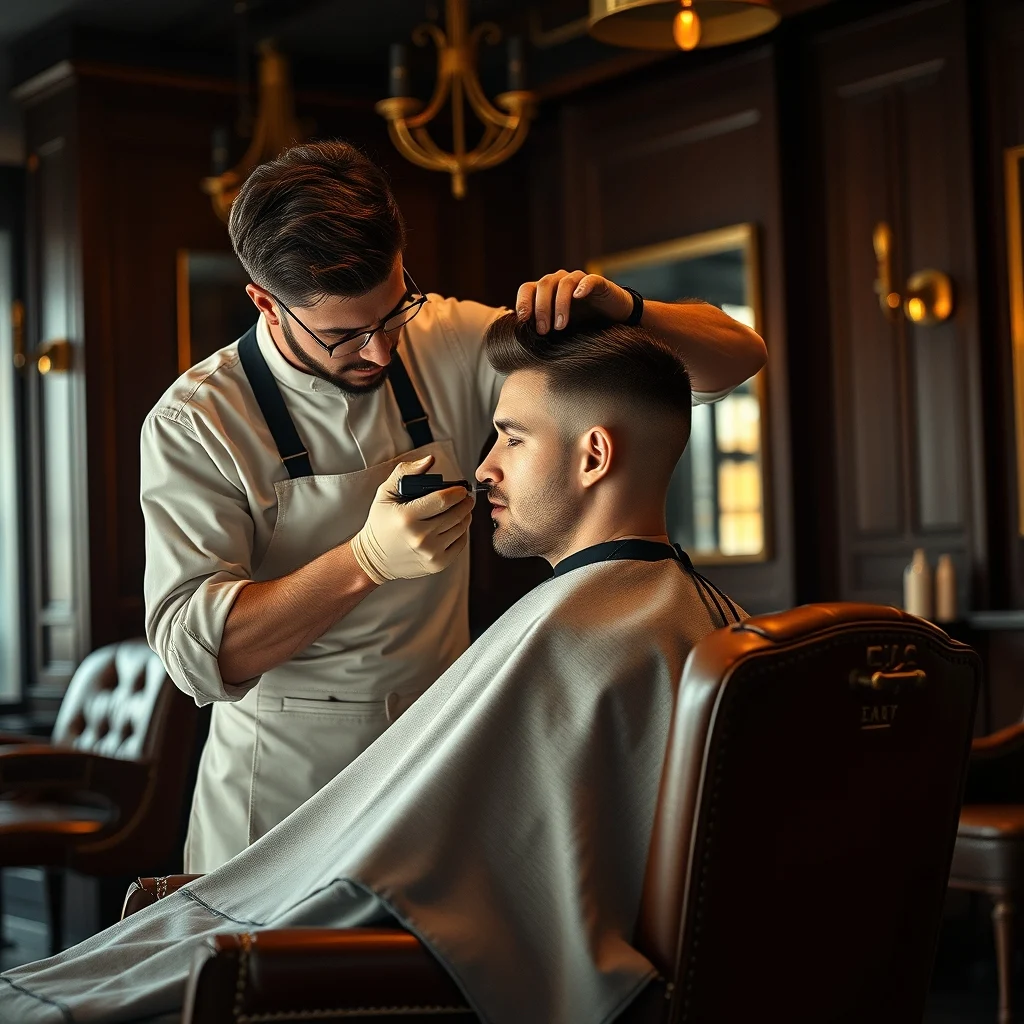
The modern grooming landscape for men has undergone a seismic shift in the past decade, transforming from a utilitarian chore into a sophisticated ritual rooted in precision, luxury, and personal expression. At the heart of this evolution lies elite barbershop craft, a discipline that merges traditional techniques with contemporary innovation to redefine masculinity through meticulous haircuts, beard sculpting, and skincare. This article explores the multifaceted dimensions of this industry, from its historical roots to its current market dynamics, operational intricacies, and the competing priorities of stakeholders shaping its future.
The Current State of Men’s Grooming: A Snapshot
As of 2024, the global men’s grooming market is valued at approximately $81.2 billion, with projections indicating a compound annual growth rate (CAGR) of 5.2% through 2030, according to a report by Grand View Research. The surge is driven by a confluence of factors: rising disposable incomes, the influence of social media, and a cultural shift toward self-care as a cornerstone of modern masculinity. Elite barbershops, once relegated to neighborhood corners, now occupy prime retail spaces in urban centers, offering services that extend beyond haircuts to include hot towel shaves, beard grooming, and even men’s facials.
This phenomenon is not confined to Western markets. In Asia, the Middle East, and Latin America, barbershops are experiencing a renaissance, with cities like Tokyo, Dubai, and São Paulo emerging as hubs for premium mens grooming. The demand is particularly pronounced among millennials and Gen Z, who view grooming as an extension of their identity rather than a mundane task. A 2023 survey by Statista revealed that 68% of men aged 18-34 visit a barber at least once every two weeks, compared to 42% of men over 50.
Historical Context: From Barbers to Craftsmen
The barbershop’s origins trace back to ancient civilizations, where barbers doubled as surgeons and dentists—a dual role reflected in the iconic barber’s pole, which symbolizes bloodletting and bandages. By the 19th century, barbershops had evolved into social hubs, particularly in African American communities, where they served as spaces for political discourse and cultural exchange. The 20th century saw a decline in their prominence, as unisex salons and fast-paced lifestyles relegated barbering to a secondary service.
The resurgence of elite barbershop craft began in the early 2000s, fueled by three key developments:
- 2005-2010: The rise of metrosexual culture, popularized by figures like David Beckham, normalized men’s investment in grooming. Brands like Axe and Old Spice capitalized on this trend with marketing campaigns that celebrated masculinity through self-care.
- 2010-2015: The proliferation of social media platforms, particularly Instagram, allowed barbers to showcase their skills globally. Hashtags like #BarberLife and #FadeMaster amassed millions of posts, turning barbers into influencers and driving demand for precision mens haircuts.
- 2015-Present: The luxury grooming market exploded, with high-end barbershops offering memberships, private suites, and bespoke products. Chains like Fellow Barber in New York and Murdock London expanded internationally, while independent shops focused on tailored mens styling and artisanal experiences.
Operational Mechanics: The Anatomy of Elite Barbering
At its core, elite barbershop craft is defined by three pillars: technique, tools, and customer experience. Unlike traditional barbering, which prioritizes speed and efficiency, elite barbershops emphasize precision, customization, and ambiance.
Techniques
The hallmark of modern barbering is the sharp fade technique, a method that involves blending hair lengths seamlessly using clippers and scissors. Fades can range from low (near the ears) to high (near the crown), with variations like the skin fade, burst fade, and temp fade. Beard crafting, another critical skill, involves shaping, trimming, and texturizing facial hair to complement facial structure. Techniques like freehand razor sculpting and hot lather shaves are reserved for premium services, often costing upwards of $100 per session.
Tools of the Trade
Elite barbers rely on specialized equipment to achieve flawless results. Key tools include:
- Clippers: Brands like Wahl, Andis, and Oster dominate the market, with models like the Wahl Magic Clip and Andis Master offering adjustable blades for precise fades.
- Straight Razors: Used for clean shaves and edge-ups, straight razors require extensive training to master. Dovo and Feather are among the most reputable brands.
- Scissors: Japanese steel scissors, such as those from Joewell and Yasaka, are favored for their sharpness and durability.
- Grooming Products: High-end barbershops stock premium products like Beardbrand oils, Proraso shaving creams, and Baxter of California pomades. These products are often sold as part of a retail strategy, contributing up to 30% of a shop’s revenue.
Customer Experience
The ambiance of an elite barbershop is designed to evoke nostalgia while incorporating modern luxuries. Elements like leather chairs, vintage decor, and curated playlists create a sensory experience that distinguishes these spaces from conventional salons. Many shops offer complimentary beverages, from craft coffee to whiskey, and some even feature in-house barbershop quartets or live jazz performances. The goal is to transform a routine appointment into a ritual—one that justifies premium pricing, which can range from $50 to $200 per visit.
Quantitative Data: Market Trends and Economic Impact
The economic footprint of elite barbershop craft extends beyond service revenue. The industry supports a robust ecosystem of manufacturers, educators, and ancillary businesses. Below is a breakdown of key metrics:
| Metric | Value (2024) | Source |
|---|---|---|
| Global Men’s Grooming Market Size | $81.2 billion | Grand View Research |
| Projected CAGR (2024-2030) | 5.2% | Statista |
| Average Price of a Premium Haircut (U.S.) | $75-$150 | IBISWorld |
| Number of Barbershops in the U.S. | 150,000+ | U.S. Bureau of Labor Statistics |
| Employment in Barbering (U.S.) | 564,000 | U.S. Bureau of Labor Statistics |
| Revenue from Grooming Products (Global) | $22.5 billion | Euromonitor International |
The data underscores the industry’s resilience. Despite economic downturns, the men’s grooming sector has remained recession-resistant, with consumers prioritizing self-care even during financial uncertainty. A 2023 report by McKinsey & Company found that 72% of men are willing to pay more for grooming services that offer a superior experience, highlighting the premiumization of the market.
Systemic Impacts: Beyond the Chair
The rise of elite barbershop craft has had far-reaching implications, influencing cultural norms, economic opportunities, and even urban development.
Cultural Shifts
Barbershops have long been spaces of community and camaraderie, but their modern iteration has taken on a new role as platforms for social change. Initiatives like The Confess Project, founded by Lorenzo Lewis, train barbers to serve as mental health advocates, leveraging their trusted relationships with clients to provide support and resources. Similarly, organizations like Cutting Edge Barbers offer free haircuts and mentorship to at-risk youth, using barbering as a tool for empowerment.
“Barbershops are more than just places to get a haircut; they’re safe spaces where men can be vulnerable,” says Lewis. “We’re breaking down the stigma around mental health one conversation at a time.”
Economic Opportunities
The barbering industry has become a viable career path for individuals seeking financial independence. Unlike traditional four-year degrees, barbering programs can be completed in 9-12 months, with tuition costs ranging from $10,000 to $20,000. The return on investment is compelling: top-tier barbers in major cities can earn six-figure incomes, with some charging $200-$300 per hour for private appointments.
“The barrier to entry is relatively low, but the ceiling is high,” explains Jamal Edwards, founder of the Barber’s Guild, a professional association for barbers. “With the right skills and business acumen, barbers can build lucrative careers without the burden of student debt.”
Urban Development
The proliferation of elite barbershops has contributed to the revitalization of urban neighborhoods. In cities like Detroit and Philadelphia, barbershops have been at the forefront of gentrification, attracting foot traffic and spurring the development of complementary businesses like cafes, boutiques, and co-working spaces. However, this trend has also raised concerns about displacement, as rising rents force long-standing, community-oriented shops to relocate.
Stakeholder Perspectives: Competing Priorities
The elite barbershop craft industry is shaped by a diverse array of stakeholders, each with distinct priorities and concerns.
Barbers and Shop Owners
For barbers, the primary challenges revolve around competition, skill development, and business sustainability. The democratization of barbering education—through platforms like YouTube and online courses—has saturated the market, making it harder for newcomers to stand out. Additionally, the rise of appointment-based apps like Booksy and Fresha has shifted power dynamics, with some barbers feeling pressured to offer discounts to secure bookings.
“The industry is at a crossroads,” says Antonio Camacho, owner of The Gents Place, a high-end barbershop chain. “We need to balance accessibility with exclusivity. If we dilute the experience, we risk losing what makes elite barbering special.”
Consumers
Consumers, particularly younger demographics, demand convenience, personalization, and authenticity. A 2024 survey by NielsenIQ found that 63% of men prefer barbershops that offer subscription models, allowing them to pay a monthly fee for unlimited services. However, older generations remain loyal to traditional barbershops, valuing the consistency and familiarity of their local barber.
“I’ve been going to the same barber for 20 years,” says Michael Thompson, a 52-year-old accountant. “He knows my hair, my preferences, and even my kids’ names. That kind of relationship can’t be replaced by an app.”
Product Manufacturers
Grooming product manufacturers face the challenge of differentiating their offerings in an oversaturated market. With brands like Harry’s, Dollar Shave Club, and Bevel competing for shelf space, innovation has become key. Recent trends include sustainable packaging, gender-neutral formulations, and products infused with CBD or adaptogens.
“The modern consumer is educated and discerning,” notes Sarah Chen, director of product development at Beardbrand. “They want products that align with their values, whether that’s sustainability, performance, or ethical sourcing.”
Regulators and Educators
Regulatory bodies and educational institutions are grappling with how to standardize training and licensing in an industry that is rapidly evolving. In the U.S., barbering regulations vary by state, with some requiring as few as 1,000 hours of training, while others mandate 2,000 hours. This inconsistency has led to calls for national standards to ensure quality and safety.
“We need to modernize our approach to barbering education,” argues Dr. Linda Sharpe, dean of the School of Cosmetology at Pivot Point Academy. “The curriculum should reflect the industry’s shift toward luxury services, including skincare, beard grooming, and even business management.”
Pending Variables and Future Catalysts
The trajectory of elite barbershop craft will be influenced by several pending variables. One of the most significant is the role of technology. Virtual reality (VR) and augmented reality (AR) are poised to revolutionize barbering education, allowing apprentices to practice techniques in a risk-free environment. Additionally, AI-driven tools like Perfect Corp’s YouCam Makeup app are enabling consumers to visualize haircuts and beard styles before committing to a change.
Another critical factor is the industry’s response to sustainability. As consumers become more environmentally conscious, barbershops are under pressure to adopt eco-friendly practices, from using biodegradable products to implementing water-saving technologies. Brands like Green Circle Salons are leading the charge, offering recycling programs for hair clippings and product containers.
The global expansion of the men’s grooming market also presents opportunities and challenges. In emerging markets like India and Nigeria, where grooming traditions are deeply rooted in culture, the adoption of Western-style barbershops is accelerating. However, local entrepreneurs are adapting these models to suit regional preferences, creating hybrid concepts that blend traditional and modern techniques.
Finally, the industry’s ability to address diversity and inclusion will shape its future. While barbering has historically been a male-dominated field, women and non-binary individuals are increasingly entering the profession, bringing fresh perspectives and expanding the definition of masculine hair design. Initiatives like the Professional Mens Stylist certification program are working to create more inclusive spaces, but systemic barriers remain.
The next decade will test the industry’s adaptability. As consumer expectations evolve and new technologies emerge, elite barbershop craft must strike a balance between preserving its heritage and embracing innovation. For those who navigate this landscape successfully, the rewards—both financial and cultural—will be substantial.
You may also like
-
The Multidimensional Framework of **Precision Mens Haircut**: A Data-Driven Analysis of Artistry, Industry Evolution, and Consumer Demand in 2024
-
The Systematic Advancement of Premium Barbering Tools: A Multidimensional Analysis of Innovation, Industry Standards, and Consumer Demand
-
The Groomed Mind: Behavioral Science, Societal Feedback, and the Strategic Calibration of Men’s Confidence and Presentation Across Contexts
-
The Comprehensive Framework of **Alpha Grooming Rituals**: Industry Standards, Technological Integration, and the Cultural Shift Toward Masculine Self-Care in 2024
-
The Strategic Blueprint of Men’s Wardrobe Intentionality: A Multidimensional Analysis of Style, Confidence, and Societal Perception in Modern Contexts