
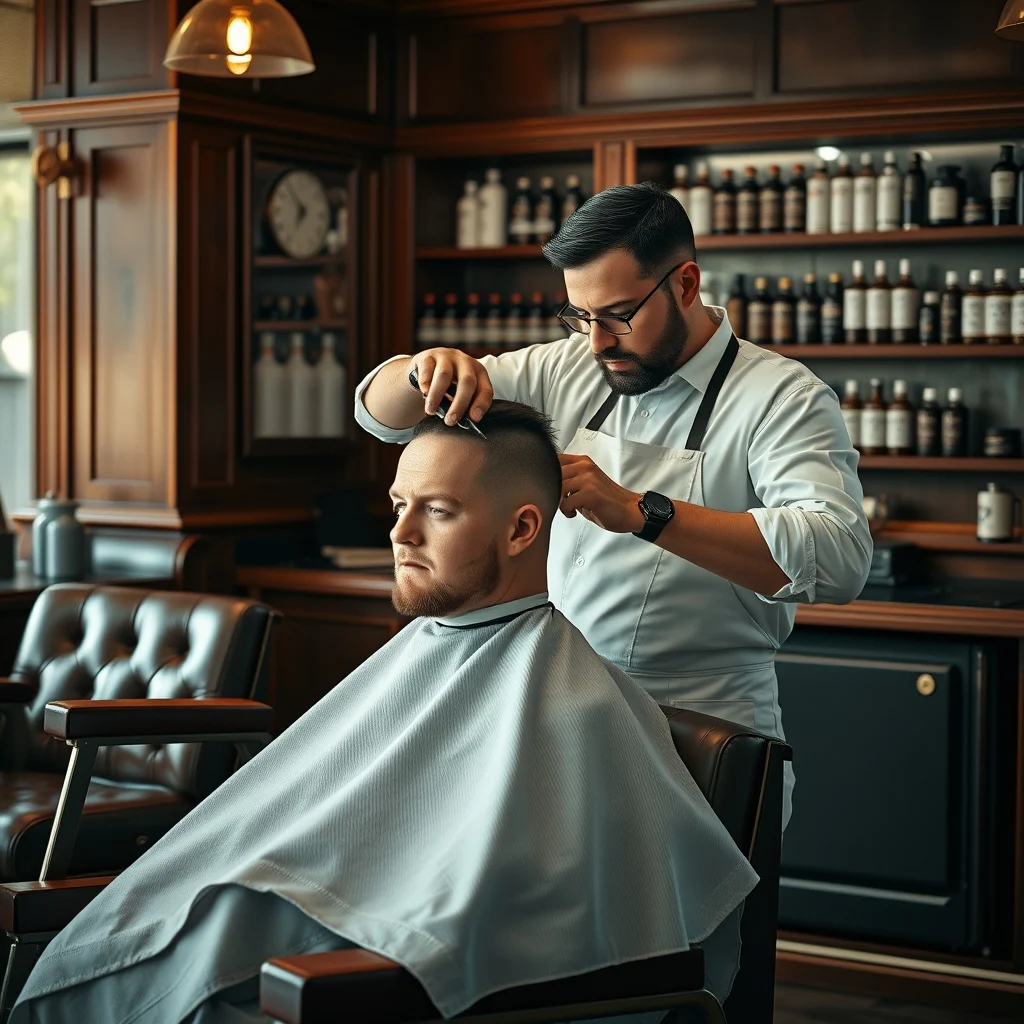
In an era where personal presentation intersects with professional success, mens premium grooming has evolved from a basic hygiene routine into a sophisticated cultural phenomenon. Barbershops, once relegated to quick haircuts and standard shaves, now function as high-end wellness hubs offering precision styling, beard crafting, and executive grooming services. This shift reflects broader societal changes, including the rise of the modern gentleman who views grooming as an extension of self-care and identity. The global men’s grooming market, valued at $74.8 billion in 2023, is projected to grow at a compound annual rate of 6.2% through 2030, driven by demand for luxury products and artisanal services.
This article examines the multifaceted landscape of mens premium grooming, tracing its historical roots, dissecting its operational mechanics, and analyzing its systemic impacts. From the resurgence of traditional barbering techniques to the adoption of cutting-edge tools, the sector is defined by both innovation and nostalgia. Stakeholders—ranging from independent barbers to multinational brands—navigate a competitive market where craftsmanship, technology, and consumer expectations collide.
The Rise of Mens Premium Grooming: A Historical Context
The concept of grooming for men is not new. Ancient Egyptian nobility used scented oils and copper razors as early as 3000 BCE, while Roman bathhouses offered shaves and haircuts as social rituals. The modern barbershop emerged in the 19th century, with figures like A.B. Moler establishing the first barber school in Chicago in 1893. These spaces were more than service providers; they were communal hubs where men gathered for conversation and camaraderie.
The 20th century saw grooming oscillate between utilitarianism and luxury. The post-WWII era prioritized efficiency, with electric clippers and disposable razors dominating the market. However, the late 2000s marked a turning point. The resurgence of beard culture, fueled by hipster aesthetics and celebrity influence, revived interest in artisanal grooming. By 2015, the global beard care market had reached $1.2 billion, prompting brands like The Art of Shaving and Harry’s to expand their premium offerings.
Key Milestones in Mens Grooming
- 1893: A.B. Moler founds the first barber school in the U.S., standardizing training and techniques.
- 1920s: The introduction of safety razors by Gillette democratizes shaving but reduces the need for professional barbers.
- 1960s: The Beatles and counterculture movements popularize longer hairstyles, challenging traditional barbering norms.
- 2010: The launch of Dollar Shave Club disrupts the razor market, emphasizing convenience and affordability.
- 2018: The global men’s grooming market surpasses $60 billion, with premium services accounting for 30% of revenue.
- 2023: AI-driven grooming tools, such as smart trimmers with skin analysis features, enter the market.
Operational Mechanics: How Premium Grooming Services Work
At the core of mens premium grooming is a blend of artistry and precision. Services like precision mens haircut and sculpted beard craft rely on a combination of traditional techniques and modern technology. Barbers undergo rigorous training, often completing 1,000 to 1,500 hours of apprenticeship to master skills such as straight-razor shaves, fade techniques, and beard shaping. Tools like Japanese steel scissors, ceramic-coated trimmers, and hot towel steamers are staples in high-end barbershops.
Client consultations are a critical component. A 2022 survey by the Professional Beauty Association found that 78% of men prefer barbers who discuss their lifestyle, face shape, and hair texture before cutting. This personalized approach extends to product recommendations, with premium barbershops stocking niche brands like Baxter of California and Truefitt & Hill. Some establishments even offer grooming subscriptions, providing monthly services tailored to individual needs.
Technology’s Role in Modern Barbering
Digital tools are reshaping the grooming experience. Apps like Booksy and Fresha allow clients to book appointments, view portfolios, and pay for services seamlessly. Augmented reality (AR) mirrors, such as those developed by ModiFace, enable customers to visualize haircuts and beard styles before committing. Meanwhile, AI-powered skin analysis devices, like the Foreo Luna 4, help barbers recommend skincare routines based on pore size, hydration levels, and sun damage.
“Technology has elevated the barbershop from a transactional space to an experiential one,” says Marcus Harvey, founder of Atlanta-based barbershop *Press & Curl* and a 2023 recipient of the *Modern Salon* Excellence in Education Award. “Clients now expect a blend of old-school craftsmanship and cutting-edge innovation. The barbers who thrive are those who can balance the two.”
Quantitative Data: Market Trends and Consumer Behavior
The mens premium grooming sector is not immune to economic fluctuations, but its resilience is evident in the data. A 2023 report by McKinsey & Company highlighted that 62% of men aged 18-34 consider grooming a non-negotiable part of their routine, up from 45% in 2018. The same report noted that men spend an average of $53 per month on grooming products and services, with urban professionals allocating up to $120.
Market Growth by Segment (2022-2024)
| Segment | 2022 Revenue (USD Billion) | 2024 Projected Revenue (USD Billion) | CAGR (2022-2024) |
|---|---|---|---|
| Haircare | 24.3 | 28.1 | 7.5% |
| Skincare | 18.7 | 22.4 | 9.4% |
| Beard Care | 5.2 | 6.1 | 8.3% |
| Fragrances | 12.5 | 14.2 | 6.6% |
| Barbershop Services | 14.1 | 16.8 | 9.1% |
Geographically, the Asia-Pacific region is the fastest-growing market, with a CAGR of 8.7%, driven by rising disposable incomes and cultural shifts in countries like China and India. In contrast, North America remains the largest market by revenue, accounting for 35% of the global total. Europe follows closely, with the UK and Germany leading in premium grooming adoption.
“The demand for elite barbershop craft is no longer confined to major cities,” explains Dr. Elena Vasquez, a consumer behavior analyst at NielsenIQ. “We’re seeing a democratization of premium grooming, with barbershops in suburban and rural areas adopting high-end services to meet local demand. The key differentiator is no longer location but expertise.”
Systemic Impacts: Beyond the Barbershop
The rise of mens premium grooming has ripple effects across industries. The beauty and personal care sector has expanded its product lines to cater to male consumers, with brands like L’Oréal and Estée Lauder launching men-specific skincare and haircare ranges. The hospitality industry has also taken note. Luxury hotels, including The Ritz-Carlton and Four Seasons, now offer in-room grooming services, while airlines like Emirates provide amenity kits with premium grooming products.
Socially, the grooming industry is challenging traditional masculinity norms. A 2023 study by the *Journal of Consumer Culture* found that 71% of men under 40 believe grooming is a form of self-expression, not a sign of vanity. This shift is reflected in advertising campaigns, with brands like Dove Men+Care and Old Spice emphasizing emotional well-being alongside physical appearance.
However, the industry is not without its challenges. The environmental impact of disposable grooming products, such as plastic razors and aerosol sprays, has drawn criticism. In response, brands like Bulldog Skincare and UpCircle have introduced sustainable packaging and refillable containers. The *Zero Waste Grooming* movement, which advocates for package-free products and biodegradable tools, has gained traction, with 42% of men expressing interest in eco-friendly grooming options, according to a 2024 survey by *Greenpeace*.
Stakeholder Perspectives: Voices from the Industry
The mens premium grooming ecosystem is shaped by diverse stakeholders, each with distinct priorities. Independent barbers, for instance, often prioritize craftsmanship and community, while corporate chains focus on scalability and brand consistency. Consumers, meanwhile, seek a balance between quality, convenience, and cost.
“The biggest misconception is that premium grooming is only for the wealthy,” says Jamal Carter, a master barber and owner of *The Grooming Lounge* in Washington, D.C. “We serve everyone from college students to CEOs. What unites our clients is the desire to feel confident in their skin. A $30 haircut can be just as transformative as a $100 one if it’s done right.”
On the corporate side, brands are investing in education and accessibility. Procter & Gamble’s *Gillette on Demand* service, which offers subscription-based razor deliveries, has partnered with barbershops nationwide to provide free grooming workshops. “Our goal is to make premium grooming accessible without compromising on quality,” says P&G’s North America Grooming Vice President, John Loughlin. “Technology and innovation are key to achieving that.”
Consumer advocates, however, caution against overcommercialization. “The risk is that grooming becomes another chore on a man’s to-do list,” warns Dr. Michael Kimmel, a sociologist and author of *Manhood in America*. “The best barbershops are those that preserve the ritualistic aspect of grooming—where men can slow down, connect, and take pride in their appearance without feeling pressured.”
Regulatory bodies are also taking notice. The U.S. Food and Drug Administration (FDA) has increased scrutiny of grooming products, particularly those containing potentially harmful ingredients like parabens and sulfates. In 2023, the FDA issued guidelines requiring brands to disclose all ingredients in men’s skincare products, a move that has prompted reformulations across the industry. The European Union has gone further, banning over 1,300 chemicals from cosmetics, including those commonly found in men’s grooming products.
Looking Ahead: The Future of Mens Premium Grooming
The mens premium grooming industry stands at a crossroads, with innovation and tradition pulling in opposite directions. On one hand, advancements in biotechnology, such as lab-grown hair follicles and personalized skincare serums, promise to revolutionize the sector. Companies like *Hims & Hers* and *Curology* are already offering telehealth consultations and customized grooming solutions, blurring the lines between healthcare and beauty.
On the other hand, the demand for authenticity and craftsmanship shows no signs of waning. Barbershops like *Truefitt & Hill* in London, which has been operating since 1805, and *Schorem* in Rotterdam, known for its old-school techniques, continue to attract clients seeking a connection to the past. “The future of grooming lies in preserving the human touch,” says *Schorem* co-founder Leenarts. “No machine can replicate the trust and rapport between a barber and his client.”
Economic factors will also play a role. Inflation and rising costs have led some consumers to prioritize affordability over luxury, prompting barbershops to introduce tiered pricing and membership models. Meanwhile, the gig economy has given rise to mobile barbers, who offer premium services in clients’ homes or offices, catering to busy professionals.
As the industry evolves, one thing remains clear: mens premium grooming is no longer a niche market but a cornerstone of modern masculinity. Whether through a meticulously sculpted beard, a precision haircut, or a tailored skincare routine, men are investing in their appearance as a form of self-respect and professional currency. The challenge for stakeholders will be to balance innovation with tradition, accessibility with exclusivity, and profit with purpose. For consumers, the opportunity lies in embracing grooming not as a chore, but as a ritual—one that honors both the past and the future of what it means to be a well-groomed man.
You may also like
-
The Multidimensional Framework of **Precision Mens Haircut**: A Data-Driven Analysis of Artistry, Industry Evolution, and Consumer Demand in 2024
-
The Systematic Advancement of Premium Barbering Tools: A Multidimensional Analysis of Innovation, Industry Standards, and Consumer Demand
-
The Groomed Mind: Behavioral Science, Societal Feedback, and the Strategic Calibration of Men’s Confidence and Presentation Across Contexts
-
The Comprehensive Framework of **Alpha Grooming Rituals**: Industry Standards, Technological Integration, and the Cultural Shift Toward Masculine Self-Care in 2024
-
The Strategic Blueprint of Men’s Wardrobe Intentionality: A Multidimensional Analysis of Style, Confidence, and Societal Perception in Modern Contexts