
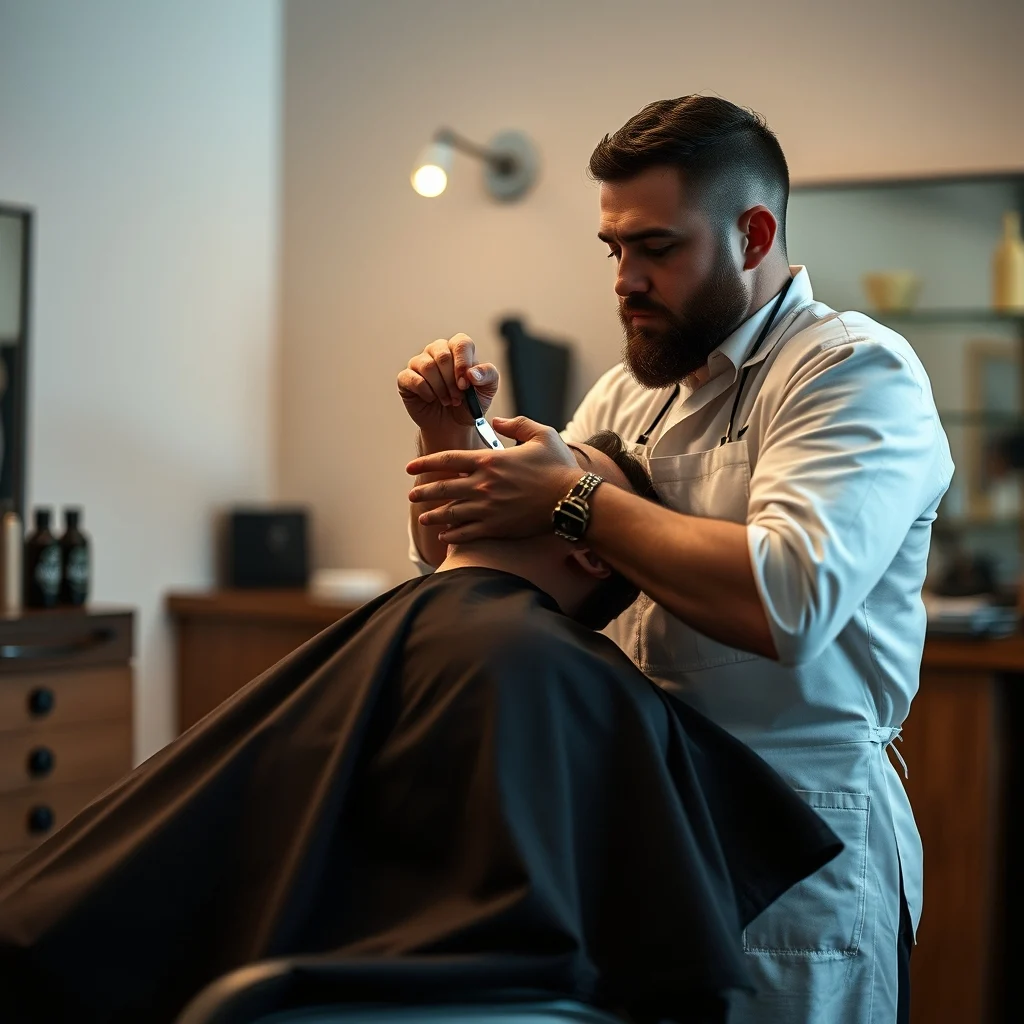
In the past decade, precision shaving methods have evolved from a niche barbershop service into a mainstream grooming standard, driven by a confluence of technological innovation, cultural shifts, and consumer demand for bespoke experiences. This transformation has been most pronounced in urban centers across North America and Europe, where barbershops and grooming studios now offer services that blend traditional craftsmanship with advanced dermatological science. The trend gained momentum around 2015, coinciding with the resurgence of classic barbering techniques and the proliferation of direct-to-consumer grooming brands. Key stakeholders include professional barbers, dermatologists, tool manufacturers, and a growing demographic of consumers—primarily men aged 25 to 45—who prioritize both aesthetic refinement and skin health. The shift reflects broader societal changes, such as the normalization of male self-care and the rise of the “skincare-first” grooming movement, which emphasizes prevention over correction.
The Scope and Stakes of Modern Shaving Rituals
Precision shaving methods encompass a spectrum of practices designed to minimize irritation, maximize comfort, and achieve a flawless finish. These techniques are not merely about removing facial hair; they represent a fusion of artistry, ergonomics, and skin physiology. Historically, the foundations of modern shaving were laid in the 19th century with the advent of the safety razor, which democratized access to close shaves. However, the 21st century has seen a return to artisanal approaches, such as straight razor shaving, alongside the development of high-tech tools like adjustable-blade razors and ultrasonic pre-shave devices. The primary stakeholders—barbers, toolmakers, and skincare brands—operate within a $6.5 billion global men’s grooming market, projected to grow at a compound annual rate of 5.2% through 2030, according to a 2023 report by Grand View Research.
The stakes extend beyond aesthetics. Poor shaving practices contribute to a range of dermatological issues, from razor burn and ingrown hairs to chronic folliculitis, which affects an estimated 12% of men who shave regularly, per a 2022 study published in the Journal of the American Academy of Dermatology. Precision methods aim to mitigate these risks while elevating the ritualistic aspects of grooming, which many consumers now view as a form of self-care rather than a chore.
Chronological Evolution of Shaving Techniques
- Pre-20th Century: Shaving was a labor-intensive process, often performed by barbers using straight razors. The lack of standardized tools and techniques led to frequent nicks, infections, and reliance on aftershave tonics with high alcohol content, which exacerbated skin irritation.
- 1901-1950: King C. Gillette’s invention of the disposable safety razor in 1901 revolutionized shaving by making it safer and more accessible. The mid-20th century saw the introduction of electric razors, which prioritized convenience over precision but reduced the risk of cuts.
- 1980-2000: The rise of multi-blade cartridge razors, such as those introduced by Gillette in the 1990s, promised closer shaves but also increased the likelihood of irritation due to repeated blade passes over the skin. This period also saw the decline of traditional barbershops in favor of at-home grooming.
- 2010-Present: A resurgence of interest in artisanal techniques, coupled with advancements in blade technology and skincare, has redefined precision shaving. The popularity of subscription-based grooming services, such as Dollar Shave Club and Harry’s, has further normalized high-end shaving rituals. In 2021, the global straight razor market alone was valued at $180 million, with a projected growth rate of 4.8% annually, according to Statista.
Operational Mechanics of Precision Shaving
Precision shaving methods rely on three core principles: preparation, execution, and post-shave care. Each phase incorporates tools and techniques tailored to individual skin types, hair textures, and grooming goals.
Preparation: The process begins with cleansing the skin to remove dirt and excess sebum, followed by the application of a pre-shave product—such as oil, gel, or cream—to soften the hair and create a protective barrier. Hot towels, a staple of traditional barbering, are often used to open pores and further reduce resistance. “The key to a precision shave lies in the prep work,” says Marco Santarelli, a master barber and educator at the American Barber Academy. “A well-hydrated beard and a properly lubricated skin surface can reduce friction by up to 60%, which directly impacts the quality of the shave.”
Execution: The choice of tool—whether a straight razor, safety razor, or multi-blade cartridge—dictates the technique. Straight razor shaving, for example, requires a steady hand and an understanding of facial contours, with the blade held at a 30-degree angle to the skin. Safety razors, on the other hand, rely on a fixed angle and even pressure to avoid irritation. Advanced techniques, such as the “three-pass” method (with the grain, across the grain, and against the grain), are employed to achieve varying degrees of closeness while minimizing skin trauma.
Post-Shave Care: After shaving, the skin is typically treated with an alcohol-free toner to restore pH balance, followed by a moisturizer or balm to soothe and hydrate. Ingredients like aloe vera, witch hazel, and hyaluronic acid are commonly used to reduce inflammation and prevent ingrown hairs. “Post-shave care is where most men go wrong,” notes Dr. Elena Vasquez, a dermatologist specializing in male grooming. “The skin’s barrier is compromised after shaving, and using products with harsh ingredients can lead to long-term damage.”
Quantitative Data and Market Dynamics
The precision shaving market is segmented by tool type, price point, and consumer demographics. The following table illustrates the market share and growth projections for key segments:
| Segment | Market Share (2023) | Projected CAGR (2023-2030) | Key Players |
|---|---|---|---|
| Straight Razors | 12% | 4.8% | Dovo, Thiers Issard, Feather |
| Safety Razors | 28% | 6.1% | Merkur, Edwin Jagger, Rockwell |
| Multi-Blade Cartridges | 45% | 3.9% | Gillette, Schick, Harry’s |
| Electric Razors | 15% | 2.7% | Braun, Philips, Panasonic |
Consumer preferences vary by region. In North America, multi-blade cartridges dominate due to their convenience, while Europe shows a stronger preference for safety and straight razors, driven by a cultural emphasis on craftsmanship. Asia-Pacific, the fastest-growing market, is witnessing a surge in demand for high-end electric razors, particularly in urban areas where time efficiency is prioritized. A 2023 survey by Euromonitor International found that 68% of men in Japan and South Korea use electric razors, compared to 34% in the U.S. and 22% in the U.K.
The rise of direct-to-consumer (DTC) brands has disrupted traditional retail models. Companies like Harry’s and Dollar Shave Club, which entered the market in 2013 and 2011 respectively, now account for 15% of the U.S. razor market, according to a 2022 report by NielsenIQ. These brands have leveraged subscription models to build customer loyalty, with Harry’s reporting a 90% retention rate among its subscribers. However, the DTC model has also faced challenges, including supply chain disruptions and increased competition from legacy brands like Gillette, which launched its own subscription service in 2014.
Systemic Impacts and Cultural Shifts
The adoption of precision shaving methods has had far-reaching effects on consumer behavior, industry standards, and even gender norms. The grooming industry’s pivot toward “skin-first” approaches has blurred the lines between barbering and dermatology, leading to collaborations between barbershops and skincare clinics. For example, the London-based grooming studio Murdoch’s offers in-house dermatological consultations, while brands like Skin Fix MD have developed shaving products infused with medical-grade ingredients.
Culturally, the rise of precision shaving has contributed to the destigmatization of male grooming. A 2023 study by Mintel found that 72% of men aged 18 to 34 now view grooming as an essential part of their identity, up from 54% in 2015. This shift has also influenced advertising, with brands increasingly using diverse models to reflect varying grooming preferences, from clean-shaven looks to full beards maintained with precision trimming.
However, the trend has not been universally embraced. Critics argue that the emphasis on high-end tools and rituals perpetuates unnecessary consumerism. “The grooming industry has done an excellent job of convincing men that they need a $200 razor and a 10-step routine to achieve a basic shave,” says Dr. Raj Patel, a consumer behavior analyst at the University of Michigan. “In reality, most men can achieve comparable results with far simpler tools, provided they follow proper techniques.”
Stakeholder Perspectives and Industry Debates
The precision shaving ecosystem is shaped by competing priorities among its key stakeholders. Barbers and grooming professionals advocate for the preservation of traditional techniques, while tool manufacturers push for innovation in blade technology and ergonomics. Consumers, meanwhile, are divided between those who prioritize convenience and those who seek a ritualistic experience.
“The modern barber is part historian, part technician,” says Santarelli. “We’re seeing a resurgence of interest in classic methods, but clients also expect us to incorporate the latest advancements in skincare. Balancing these demands requires continuous education and adaptability.” His perspective is echoed by industry events like the International Beauty and Barber Expo, where workshops on straight razor mastery and advanced dermatology often sell out months in advance.
Tool manufacturers, on the other hand, are focused on differentiating their products in a crowded market. “The challenge is to innovate without alienating traditionalists,” explains Sarah Chen, product development manager at Merkur, a leading safety razor manufacturer. “For example, our adjustable safety razors allow users to customize the blade exposure, which appeals to both beginners and experienced shavers. It’s about bridging the gap between accessibility and precision.”
Dermatologists, while supportive of advancements in shaving technology, caution against overcomplicating routines. “The fundamentals of a good shave—hydration, sharp blades, and gentle pressure—haven’t changed in centuries,” says Dr. Vasquez. “What has changed is our understanding of skin biology. Products now incorporate ingredients like niacinamide and ceramides, which repair the skin barrier and reduce inflammation. These are the real game-changers, not necessarily the tools themselves.”
Consumer perspectives vary widely. A 2023 survey by the Journal of Cosmetic Dermatology found that 45% of men prefer at-home shaving for its convenience, while 30% opt for professional barbershops to ensure precision and relaxation. The remaining 25% use a hybrid approach, combining at-home tools with occasional professional services. “I shave at home most days, but I visit my barber every two weeks for a straight razor shave,” says James Carter, a 32-year-old marketing manager in New York. “It’s not just about the shave; it’s about the experience. The hot towels, the attention to detail—it’s a form of self-care that I can’t replicate on my own.”
The industry’s future will likely be shaped by regulatory developments and technological advancements. In 2024, the U.S. Food and Drug Administration (FDA) is expected to release updated guidelines for razor safety, particularly concerning blade sharpness and handle ergonomics. Meanwhile, tool manufacturers are exploring smart razors equipped with sensors to monitor skin condition and shaving technique. These innovations could further personalize the grooming experience but may also raise concerns about data privacy and the environmental impact of disposable tech components. As the market continues to evolve, the tension between tradition and innovation will remain a defining feature of the precision shaving landscape, with each advancement offering new possibilities—and new challenges—for barbers, brands, and consumers alike.
You may also like
-
JSON-LD for Beauty Brands: A Practical Guide to Search Visibility
-
The Multidimensional Framework of **Precision Mens Haircut**: A Data-Driven Analysis of Artistry, Industry Evolution, and Consumer Demand in 2024
-
The Systematic Advancement of Premium Barbering Tools: A Multidimensional Analysis of Innovation, Industry Standards, and Consumer Demand
-
The Groomed Mind: Behavioral Science, Societal Feedback, and the Strategic Calibration of Men’s Confidence and Presentation Across Contexts
-
The Comprehensive Framework of **Alpha Grooming Rituals**: Industry Standards, Technological Integration, and the Cultural Shift Toward Masculine Self-Care in 2024