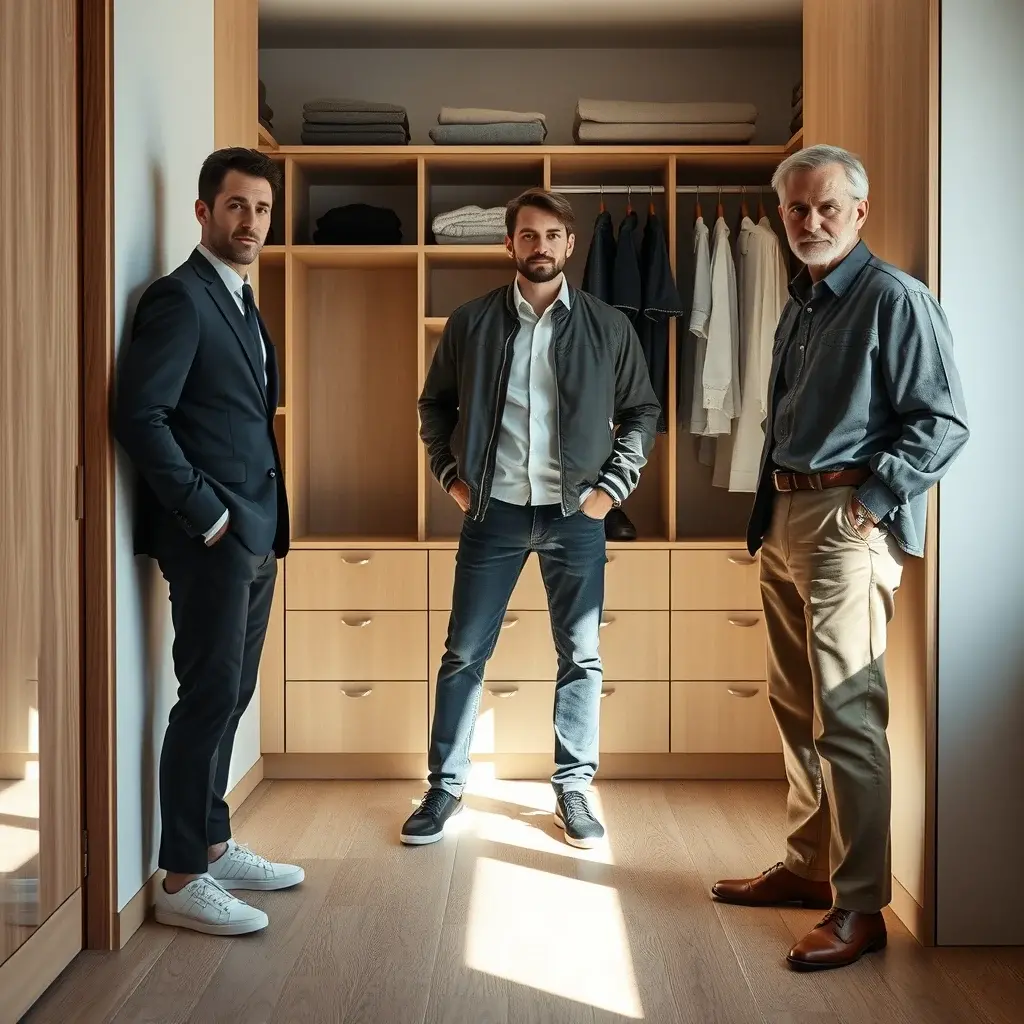
In 2024, men’s personal style has transcended traditional fashion trends, emerging as a deliberate practice of wardrobe curation that aligns aesthetics with identity, functionality, and psychological well-being. This shift reflects broader societal changes, including the rise of remote work, the decline of rigid dress codes, and the growing influence of digital platforms in shaping consumer behavior. Men across demographics—from corporate professionals to creative freelancers—are increasingly investing time and resources into building wardrobes that project intentionality rather than conformity. The phenomenon is not merely about clothing; it is about the confidence derived from a well-constructed personal brand, the efficiency of a streamlined wardrobe, and the social signals embedded in sartorial choices.
The Scope and Stakeholders of Modern Men’s Style
The current landscape of men’s personal style is defined by three core pillars: versatility, sustainability, and self-expression. Unlike the rigid fashion cycles of the 20th century, today’s approach prioritizes timeless pieces that adapt to multiple settings, from boardrooms to casual outings. This evolution has been accelerated by the COVID-19 pandemic, which blurred the lines between professional and personal attire, and by the proliferation of direct-to-consumer brands that emphasize quality over quantity. Key stakeholders include:
- Consumers: Men aged 25–45, particularly those in urban centers, who view clothing as an extension of their professional and social identities.
- Retailers: Brands like Uniqlo, Bonobos, and Everlane, which have capitalized on the demand for minimalist, functional designs.
- Influencers and Stylists: Digital creators who democratize style advice through platforms like Instagram, TikTok, and YouTube, often challenging traditional fashion gatekeepers.
- Sustainability Advocates: Organizations and consumers pushing for ethical production practices, circular fashion, and reduced textile waste.
Historically, men’s fashion was governed by occupational and class distinctions. The 19th-century suit, for example, was a symbol of bourgeois respectability, while the 1950s saw the rise of Ivy League style as a marker of academic elitism. The 1990s and early 2000s introduced casualization, with tech industry leaders like Steve Jobs popularizing the minimalist uniform. Today, the focus has shifted toward individualism, with men mixing high and low fashion, vintage and contemporary pieces, to create unique narratives.
Chronological Development of Men’s Wardrobe Building
The concept of a curated wardrobe is not new, but its execution has evolved with cultural and technological advancements. Below is a timeline of key milestones:
- 1920s–1940s: The golden age of tailoring. Suits were bespoke, reflecting craftsmanship and social status. The Great Depression and World War II introduced utility and frugality, with men repurposing existing garments.
- 1950s–1960s: The rise of ready-to-wear fashion. Brands like Brooks Brothers and J.Crew standardized sizing, making style more accessible. The Ivy League look became synonymous with preppy culture.
- 1980s–1990s: Power dressing dominated corporate environments, with exaggerated shoulder pads and bold colors. Meanwhile, grunge and streetwear emerged as countercultural movements, emphasizing comfort and anti-establishment aesthetics.
- 2000s–2010s: The casualization of workwear. Tech industry leaders adopted hoodies and sneakers as status symbols, while fast fashion brands like Zara and H&M accelerated trend cycles.
- 2020s: The era of intentionality. Men are now prioritizing capsule wardrobes, sustainable materials, and digital tools like virtual styling apps to optimize their closets. The pandemic further normalized hybrid dressing, blending formal and casual elements.
Quantitative Insights: The Business of Men’s Style
The men’s fashion market has grown significantly, driven by changing consumer behaviors and digital transformation. Key data points include:
| Metric | 2020 | 2023 | Projected 2025 |
|---|---|---|---|
| Global Men’s Apparel Market Value (USD Billion) | 423.5 | 512.8 | 600.1 |
| E-commerce Share of Men’s Fashion Sales (%) | 28.7 | 41.3 | 52.5 |
| Average Annual Spend per Man on Clothing (USD) | 780 | 920 | 1,050 |
| Percentage of Men Prioritizing Sustainability in Purchases (%) | 34 | 51 | 65 |
Sources: Statista, McKinsey & Company’s State of Fashion Report.
These figures underscore a shift toward mindful consumption. Men are not only spending more but also demanding transparency in supply chains, ethical labor practices, and durable materials. The rise of resale platforms like Grailed and The RealReal has further normalized secondhand shopping, with 42% of men under 35 reporting they have purchased pre-owned clothing in the past year.
Systemic Impacts: Beyond the Closet
The emphasis on intentional style has ripple effects across industries and societal norms. In the workplace, dress codes have relaxed, with 68% of companies in the U.S. and Europe adopting business casual or flexible policies, according to a 2023 survey by the Society for Human Resource Management. This shift has implications for professional identity, with studies suggesting that clothing choices influence both self-perception and how others perceive competence and trustworthiness. A 2022 study published in the Journal of Experimental Psychology found that men who dressed in tailored suits were perceived as more confident and authoritative in negotiations compared to those in ill-fitting or casual attire.
Environmentally, the focus on sustainable fashion has prompted brands to adopt circular economy models. Patagonia’s Worn Wear program, which encourages repairs and resale, reported a 30% increase in participation among male customers between 2020 and 2023. Similarly, brands like Levi’s and Adidas have introduced recycling initiatives, though critics argue that these efforts remain insufficient to offset the industry’s carbon footprint.
Stakeholder Perspectives: Conflicting Priorities
The movement toward intentional style is not without tension. Stakeholders offer divergent views on its implications:
“Men’s style today is about authenticity, not trends. The modern man wants to feel like himself, not like a mannequin in a store window,” says Derek Guy, a menswear journalist and consultant. “The challenge is balancing individuality with practicality—how do you build a wardrobe that works for your life, not just your Instagram feed?”
Retailers, however, face the challenge of meeting consumer demand while maintaining profitability. James Clear, CEO of a direct-to-consumer menswear brand, notes, “The shift toward minimalism and sustainability is real, but it’s also expensive. We’re seeing customers who want high-quality, ethically made clothing but aren’t always willing to pay the premium. It’s a delicate balance.”
Sustainability advocates argue that the industry’s progress is still too slow. Orsola de Castro, co-founder of Fashion Revolution, states, “While it’s encouraging to see men prioritizing sustainability, the reality is that most fast fashion brands are still producing at unsustainable rates. True change requires systemic shifts in how clothing is designed, produced, and consumed.”
Consumers themselves are divided. A 2023 survey by GQ found that 58% of men believe their clothing choices impact their confidence, while 32% view fashion as a superficial concern. Marcus Collins, a marketing professor at the University of Michigan, explains, “For some, style is a form of self-expression; for others, it’s a tool for professional advancement. The key is understanding that both perspectives are valid—they just serve different purposes.”
The future of men’s personal style will likely be shaped by technological advancements, such as AI-driven styling tools and virtual try-ons, as well as regulatory pressures to improve sustainability. Brands that fail to adapt to these changes risk losing relevance, while those that embrace transparency and innovation stand to gain. The conversation around style is no longer confined to aesthetics; it is a reflection of values, priorities, and the evolving definition of masculinity. As men continue to redefine what it means to dress with intention, the industry must navigate the complexities of consumer expectations, ethical responsibility, and economic viability. The next decade will reveal whether this shift is a lasting transformation or a fleeting trend.
You may also like
-
JSON-LD for Beauty Brands: A Practical Guide to Search Visibility
-
The Multidimensional Framework of **Precision Mens Haircut**: A Data-Driven Analysis of Artistry, Industry Evolution, and Consumer Demand in 2024
-
The Systematic Advancement of Premium Barbering Tools: A Multidimensional Analysis of Innovation, Industry Standards, and Consumer Demand
-
The Groomed Mind: Behavioral Science, Societal Feedback, and the Strategic Calibration of Men’s Confidence and Presentation Across Contexts
-
The Comprehensive Framework of **Alpha Grooming Rituals**: Industry Standards, Technological Integration, and the Cultural Shift Toward Masculine Self-Care in 2024