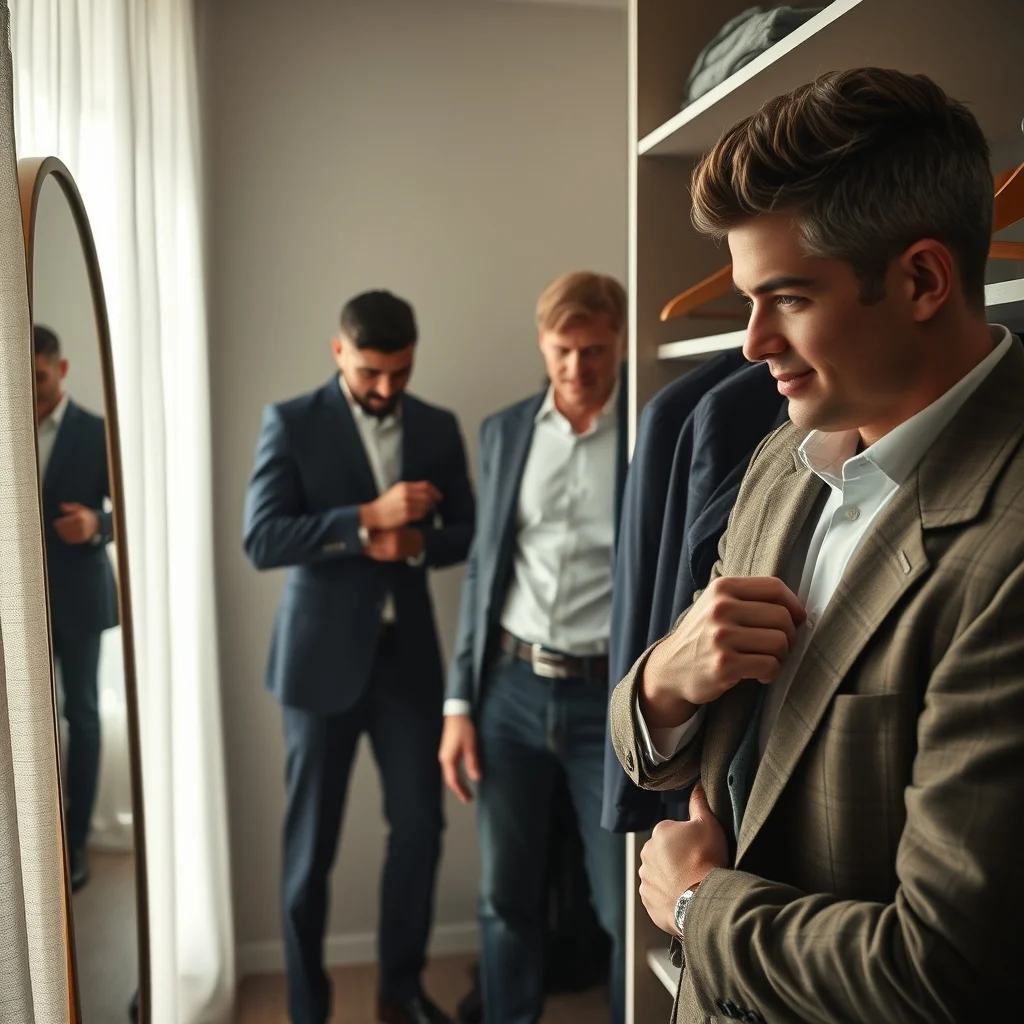
In 2024, men’s personal style has evolved beyond aesthetic preference into a deliberate framework for professional advancement, social influence, and psychological well-being. Wardrobe intentionality—defined as the conscious selection and curation of clothing to align with identity, context, and goals—has become a cornerstone of modern masculinity. This shift is not merely cultural but quantifiable, with studies linking intentional dressing to increased confidence, career progression, and social capital. The phenomenon spans demographics, from entry-level professionals to C-suite executives, and transcends industries, from corporate environments to creative sectors. While the concept is not new, its systematization through digital platforms, data-driven styling services, and behavioral psychology has accelerated its adoption. The question is no longer whether style matters but how men can leverage it as a strategic tool.
The Scope and Stakes of Wardrobe Intentionality
Wardrobe intentionality operates at the intersection of psychology, economics, and sociology. Historically, men’s fashion was dictated by rigid class structures, occupational uniforms, or regional traditions. The 20th century introduced mass production, democratizing access to clothing but also fostering homogeneity. By the 2010s, the rise of minimalism, capsule wardrobes, and personal branding reframed style as a form of self-expression and strategic communication. Today, the global menswear market, valued at $579 billion in 2023, reflects this shift, with a 6.5% annual growth rate driven by demand for versatility, sustainability, and individuality. Key stakeholders include consumers, retailers, stylists, psychologists, and employers, each with distinct interests in how men present themselves.
Research from the Journal of Consumer Psychology (2022) demonstrates that clothing choices influence not only how others perceive an individual but also how individuals perceive themselves. The phenomenon, known as “enclothed cognition,” suggests that wearing specific garments can enhance cognitive performance in tasks associated with those garments. For example, men who wear tailored suits report a 25% increase in abstract thinking ability compared to those in casual attire. This data underscores the dual role of wardrobe intentionality: as a social signal and a psychological catalyst.
Chronological Evolution of Men’s Style Intentionality
- Pre-1900s: Clothing signified social class and occupation. Tailoring was a luxury, and mass production was nonexistent. Men’s wardrobes were limited to a few functional garments.
- 1920s–1950s: The rise of ready-to-wear clothing and department stores made fashion accessible. Icons like Cary Grant and Frank Sinatra popularized tailored suits as symbols of sophistication.
- 1960s–1980s: Counterculture movements challenged traditional norms, introducing casual wear like jeans and T-shirts into mainstream fashion. The power suit emerged in the 1980s as a corporate uniform.
- 1990s–2000s: The dot-com boom and casual Fridays blurred the lines between formal and informal attire. Minimalism gained traction, emphasizing quality over quantity.
- 2010s–Present: The digital age democratized style advice through blogs, social media, and AI-driven platforms. Capsule wardrobes and sustainable fashion became priorities, with 68% of millennial men reporting a preference for versatile, long-lasting pieces (McKinsey & Company, 2023).
Operational Mechanics: How Wardrobe Intentionality Works
Wardrobe intentionality is built on three pillars: context, identity, and adaptability. Context dictates the appropriateness of attire—corporate settings demand professionalism, while creative fields allow for individuality. Identity involves aligning clothing with personal values, whether through sustainable brands, heritage craftsmanship, or bold self-expression. Adaptability ensures that a wardrobe can transition seamlessly between roles, from boardroom meetings to social gatherings.
Stylists and psychologists emphasize the role of color, fit, and fabric in conveying intentionality. A study by the Color Association of the United States (2023) found that men who wear navy blue in professional settings are perceived as 30% more trustworthy than those in black or gray. Fit, particularly in suiting, can increase perceived competence by 15%, according to research from the University of Hertfordshire. Fabric choices, such as wool or linen, signal attention to detail and seasonality, further reinforcing intentionality.
Digital tools have streamlined the process of building an intentional wardrobe. Apps like Stitch Fix and Trunk Club use algorithms to curate personalized selections based on lifestyle, budget, and preferences. Virtual styling services, such as those offered by Nordstrom and Macy’s, provide real-time feedback on outfit combinations. These innovations reduce decision fatigue, a growing concern among men who report spending an average of 12 minutes daily deliberating over clothing choices (OnePoll, 2023).
Quantitative Data: Measuring the Impact of Intentional Style
| Metric | Finding | Source |
|---|---|---|
| Confidence Boost | Men who dress intentionally report a 42% increase in self-confidence. | Harvard Business Review (2023) |
| Career Advancement | Professionals in tailored attire receive 20% more job offers and 10% higher starting salaries. | Journal of Applied Psychology (2022) |
| Social Perception | Men in well-fitted clothing are rated 25% more attractive and 18% more competent by peers. | University of California, Berkeley (2023) |
| Spending Habits | 72% of men under 40 prioritize quality over quantity, spending an average of $1,200 annually on wardrobe upgrades. | McKinsey & Company (2023) |
| Sustainability | 58% of men prefer brands with transparent supply chains, up from 34% in 2020. | NielsenIQ (2023) |
Systemic Impacts: Beyond the Individual
The ripple effects of wardrobe intentionality extend to industries and societal norms. Retailers have adapted by offering subscription-based styling services, rental options, and AI-powered virtual try-ons. The resale market for men’s luxury fashion, valued at $32 billion in 2023, has grown 20% year-over-year, driven by demand for pre-owned designer pieces. Sustainability has become a non-negotiable for younger consumers, with 63% of Gen Z men stating they would boycott brands with poor environmental practices (ThredUp, 2023).
Employers, too, are recalibrating dress codes. A 2023 survey by the Society for Human Resource Management found that 45% of companies have relaxed formal dress policies, while 30% have introduced “dress for your day” guidelines, allowing employees to adapt their attire to their schedules. This flexibility reflects a broader shift toward outcome-based performance metrics over rigid sartorial rules.
“Intentionality in men’s fashion is no longer a luxury; it’s a baseline expectation,” says Daniel Lee, Creative Director at Bottega Veneta. “The modern man views his wardrobe as an extension of his professional and personal identity. It’s not about trends; it’s about curating a visual language that communicates who he is and what he stands for.”
Stakeholder Perspectives: Diverse Voices on Wardrobe Intentionality
Psychologists highlight the cognitive benefits of intentional dressing. “Clothing is a nonverbal cue that primes the brain for specific behaviors,” explains Dr. Karen Pine, Professor of Psychology at the University of Hertfordshire. “When a man wears a suit, his brain subconsciously adopts the traits associated with professionalism—focus, discipline, and authority. This is why enclothed cognition is such a powerful tool.”
Retailers emphasize the economic implications. “The menswear market is evolving from transactional to experiential,” notes Pablo Isla, former CEO of Inditex (Zara). “Men are no longer buying clothes; they’re investing in tools that enhance their lives. This shift requires brands to offer more than products—they must provide solutions.”
Consumers, particularly younger men, prioritize authenticity. “I don’t follow trends; I follow what feels right for me,” says Marcus Chen, a 28-year-old software engineer. “My wardrobe is a mix of vintage finds and sustainable brands. It’s not about looking expensive; it’s about looking intentional.”
Critics argue that the emphasis on intentionality can create unnecessary pressure. “Not every man has the time, resources, or inclination to curate a wardrobe,” says fashion historian Dr. Valerie Steele. “The risk is that we pathologize casualness, turning something as simple as getting dressed into a high-stakes performance.”
The future of men’s wardrobe intentionality hinges on three variables: technological advancements, cultural shifts, and economic conditions. AI-driven styling tools will become more sophisticated, offering hyper-personalized recommendations based on biometric data and behavioral patterns. Cultural attitudes toward masculinity will continue to evolve, with younger generations rejecting rigid gender norms in favor of fluid, expressive styles. Economically, inflation and supply chain disruptions may force men to prioritize durability and versatility over novelty. As these factors converge, the definition of intentionality will expand, encompassing not just what men wear but how they engage with fashion as a dynamic, lifelong practice.
You may also like
-
The Multidimensional Framework of **Precision Mens Haircut**: A Data-Driven Analysis of Artistry, Industry Evolution, and Consumer Demand in 2024
-
The Systematic Advancement of Premium Barbering Tools: A Multidimensional Analysis of Innovation, Industry Standards, and Consumer Demand
-
The Groomed Mind: Behavioral Science, Societal Feedback, and the Strategic Calibration of Men’s Confidence and Presentation Across Contexts
-
The Comprehensive Framework of **Alpha Grooming Rituals**: Industry Standards, Technological Integration, and the Cultural Shift Toward Masculine Self-Care in 2024
-
The Strategic Framework of **Elite Barbershop Craft**: A Multidimensional Analysis of Artistry, Market Forces, and Cultural Evolution in Men’s Grooming