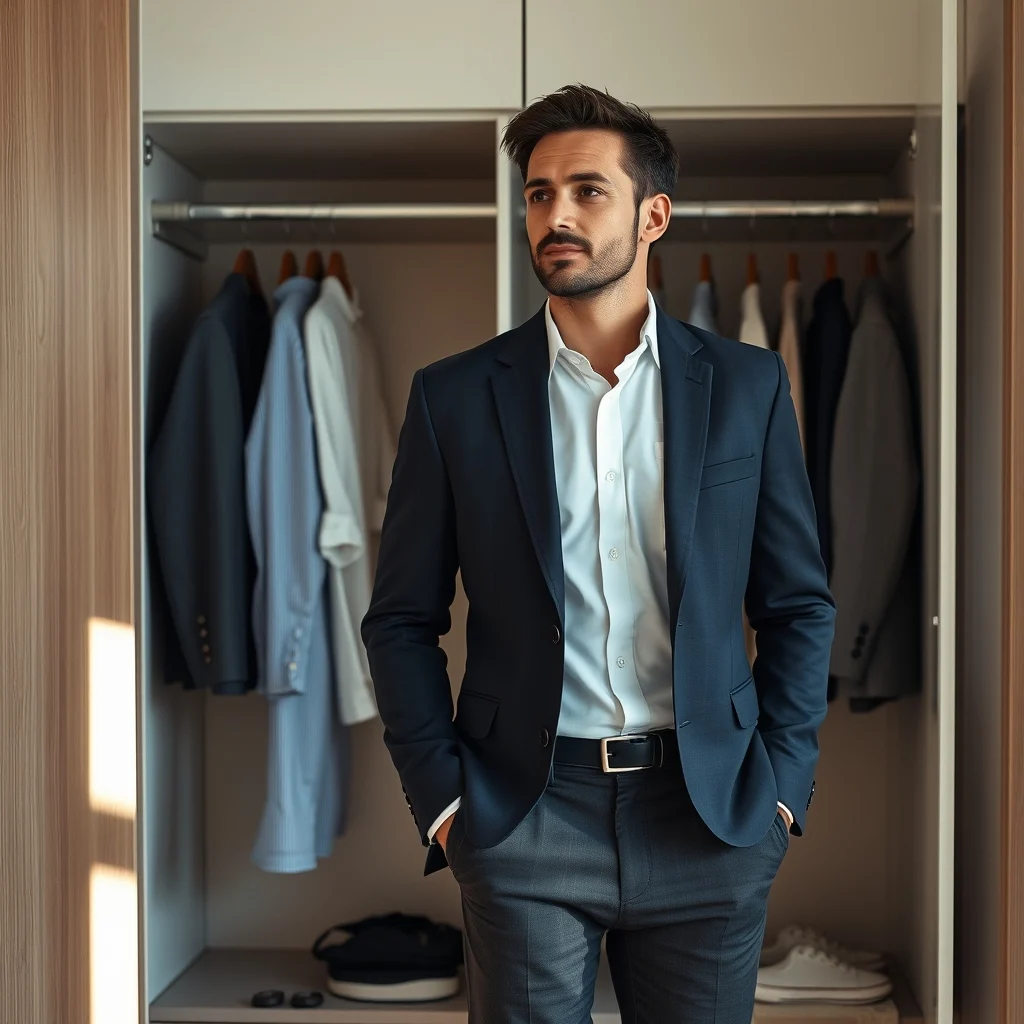
In 2024, the conversation around men’s personal style has evolved beyond aesthetics into a discourse on intentionality, psychological reinforcement, and societal perception. This shift reflects a broader recognition that wardrobe choices are not merely about clothing but about constructing identity, projecting confidence, and navigating professional and social landscapes. The phenomenon is observable across urban centers in North America, Europe, and Asia, where men aged 25 to 45 are increasingly investing time and resources into curating wardrobes that align with their personal and professional goals. The trend is driven by a confluence of factors: the rise of remote work, the influence of social media, and a growing body of research linking attire to cognitive performance and social outcomes. Yet, the movement is not uniform. Disparities in access, cultural norms, and economic constraints create a fragmented landscape where intentional style remains a privilege for some and an aspiration for others.
The concept of intentional wardrobe building is rooted in the principle that clothing serves as a nonverbal communication tool, signaling competence, credibility, and self-assurance. Historically, men’s fashion has oscillated between utility and expression, from the rigid formality of the 19th-century suit to the rebellious casualness of 1990s grunge. The current emphasis on intentionality represents a synthesis of these extremes, prioritizing versatility, fit, and personal branding. Key stakeholders in this ecosystem include fashion psychologists, stylists, retailers, and consumers, each contributing to a dynamic interplay of theory, commerce, and individual agency. The stakes are high: studies suggest that attire can influence hiring decisions, salary negotiations, and even cognitive performance, making wardrobe choices a strategic consideration rather than a superficial one.
The Historical Trajectory of Men’s Wardrobe Intentionality
The evolution of men’s personal style can be traced through distinct phases, each reflecting broader societal shifts. In the early 20th century, the suit emerged as the dominant symbol of professionalism and social status, a uniform that transcended class boundaries while reinforcing them. The post-World War II era saw the rise of casual wear, as leisure time became a cultural priority and brands like Levi’s and Ralph Lauren capitalized on the growing demand for relaxed, yet aspirational, clothing. The 1980s and 1990s introduced a dichotomy: the power suit, epitomized by Wall Street’s sharp tailoring, coexisted with the anti-fashion statements of punk and hip-hop, which rejected traditional norms in favor of individuality.
The 21st century has been defined by a paradox: the democratization of fashion through fast fashion and e-commerce has made style more accessible, yet the pressure to curate a distinctive personal brand has intensified. The advent of social media platforms like Instagram and TikTok has accelerated this trend, with influencers and stylists offering real-time guidance on wardrobe essentials, color theory, and fit. A 2023 report by McKinsey & Company found that 68% of men aged 25 to 34 consider their clothing choices a reflection of their personal brand, up from 42% in 2015. This shift is not merely generational but structural, as remote work and hybrid professional environments demand a redefinition of workplace attire.
The Operational Mechanics of Intentional Wardrobe Building
Intentional wardrobe building operates on three core principles: versatility, fit, and psychological alignment. Versatility ensures that each piece serves multiple functions, reducing clutter and maximizing utility. A well-constructed capsule wardrobe, for example, might consist of 30 to 40 items that can be mixed and matched to create dozens of outfits. Fit is equally critical; poorly tailored clothing undermines the intended message of competence and attention to detail. A 2022 study published in the Journal of Experimental Psychology found that men wearing well-fitted clothing reported higher levels of self-efficacy and were perceived as more authoritative by peers.
Psychological alignment refers to the process of selecting clothing that resonates with an individual’s self-concept and goals. This principle is grounded in enclothed cognition, a theory developed by researchers Hajo Adam and Adam Galinsky in 2012, which posits that clothing affects the wearer’s psychological processes. For instance, wearing a suit may enhance abstract thinking and negotiation skills, while athletic wear can improve performance in physical tasks. Stylists and fashion psychologists often collaborate to help clients identify their style archetype—whether classic, minimalist, or eclectic—and curate a wardrobe that reinforces their desired identity.
Quantitative Insights: The Data Behind the Trend
The financial and psychological impact of intentional wardrobe building is measurable. According to a 2024 survey by the NPD Group, the global men’s apparel market is projected to reach $570 billion by 2025, with a compound annual growth rate (CAGR) of 4.2%. The demand for premium and sustainable fashion is driving this growth, as consumers prioritize quality over quantity. A breakdown of spending habits reveals key trends:
| Category | 2020 Spending (USD) | 2024 Spending (USD) | CAGR (%) |
|---|---|---|---|
| Tailored Suits | 12.4B | 15.8B | 6.2 |
| Casual Wear | 45.2B | 58.7B | 6.8 |
| Footwear | 22.1B | 29.3B | 7.3 |
| Accessories | 8.9B | 12.5B | 8.9 |
Beyond economics, the psychological benefits are equally compelling. A 2023 study by the University of Hertfordshire found that men who described their wardrobes as “intentional” reported a 23% increase in self-confidence compared to those who did not. The study also noted a correlation between intentional dressing and career advancement, with 41% of respondents attributing a promotion or raise to their improved professional image. These findings align with broader research on the halo effect, a cognitive bias where positive impressions in one area (e.g., appearance) influence perceptions in others (e.g., competence).
Systemic Impacts: From Individual to Societal
The ripple effects of intentional wardrobe building extend beyond the individual, influencing workplace cultures, social dynamics, and even environmental sustainability. In professional settings, dress codes have relaxed in many industries, yet the expectation of intentionality remains. A 2024 report by the Society for Human Resource Management (SHRM) found that 63% of hiring managers consider a candidate’s attire a factor in hiring decisions, particularly for client-facing roles. This shift has prompted companies to offer stipends for professional attire, recognizing that wardrobe choices can impact employee performance and company reputation.
Socially, the emphasis on intentional style has sparked debates about authenticity and conformity. Critics argue that the pressure to curate a personal brand can lead to homogenization, where individuals prioritize trends over self-expression. Dr. Elizabeth L. Cline, author of Overdressed: The Shockingly High Cost of Cheap Fashion, notes, “The democratization of style has created a paradox where more options lead to greater anxiety about getting it right. The challenge is balancing personal expression with the expectations of a hyper-visual culture.”
Environmentally, the trend toward intentional wardrobe building has both positive and negative implications. On one hand, the focus on quality and longevity reduces waste, aligning with the principles of slow fashion. On the other, the demand for premium materials and ethical production can drive up costs, limiting access for lower-income consumers. A 2023 report by the Ellen MacArthur Foundation found that the fashion industry accounts for 10% of global carbon emissions, with fast fashion exacerbating the problem. Intentional wardrobe building offers a potential solution, but its scalability remains a challenge.
Stakeholder Perspectives: A Multifaceted Debate
The discourse on men’s intentional style is shaped by diverse stakeholders, each offering distinct perspectives. Fashion psychologists emphasize the cognitive and emotional benefits of intentional dressing. Dr. Karen Pine, a professor of psychology at the University of Hertfordshire, states, “Clothing is a form of self-talk. When men dress intentionally, they are not just communicating with others; they are reinforcing their own identity and capabilities.”
Retailers and brands, meanwhile, are adapting to the trend by offering personalized styling services and sustainable options. Patagonia, for example, has introduced a “Worn Wear” program, encouraging consumers to buy used clothing and repair existing items. “The future of fashion is circular,” says Ryan Gellert, CEO of Patagonia. “Intentional wardrobe building isn’t just about looking good; it’s about making choices that align with your values.”
Consumers, however, present a more nuanced picture. While many embrace the principles of intentionality, others resist what they perceive as an unnecessary expense or a superficial concern. A 2024 survey by YouGov found that 37% of men aged 18 to 34 view wardrobe building as a “luxury” rather than a necessity, citing financial constraints as the primary barrier. This divide highlights the tension between aspiration and accessibility in the fashion industry.
Policymakers and advocates are beginning to address these disparities. In 2023, the European Union introduced the EU Ecolabel for clothing, a certification system designed to promote sustainable and ethical production. The initiative aims to make intentional wardrobe building more accessible by providing consumers with transparent information about the environmental and social impact of their purchases. “Sustainability should not be a privilege,” says Virginijus Sinkevičius, EU Commissioner for the Environment. “Our goal is to create a level playing field where everyone can make informed choices.”
The trajectory of men’s intentional style in 2024 and beyond will depend on several variables. Economic fluctuations, technological advancements, and shifting cultural norms will shape the accessibility and relevance of wardrobe building. The rise of AI-driven styling tools, such as virtual try-ons and personalized recommendations, could democratize the process, making it easier for consumers to curate intentional wardrobes. However, the environmental impact of the fashion industry remains a critical concern, with calls for systemic change growing louder. As the conversation evolves, the challenge will be to balance individual expression with collective responsibility, ensuring that intentional style remains a tool for empowerment rather than exclusion.
You may also like
-
The Multidimensional Framework of **Precision Mens Haircut**: A Data-Driven Analysis of Artistry, Industry Evolution, and Consumer Demand in 2024
-
The Systematic Advancement of Premium Barbering Tools: A Multidimensional Analysis of Innovation, Industry Standards, and Consumer Demand
-
The Groomed Mind: Behavioral Science, Societal Feedback, and the Strategic Calibration of Men’s Confidence and Presentation Across Contexts
-
The Comprehensive Framework of **Alpha Grooming Rituals**: Industry Standards, Technological Integration, and the Cultural Shift Toward Masculine Self-Care in 2024
-
The Strategic Blueprint of Men’s Wardrobe Intentionality: A Multidimensional Analysis of Style, Confidence, and Societal Perception in Modern Contexts