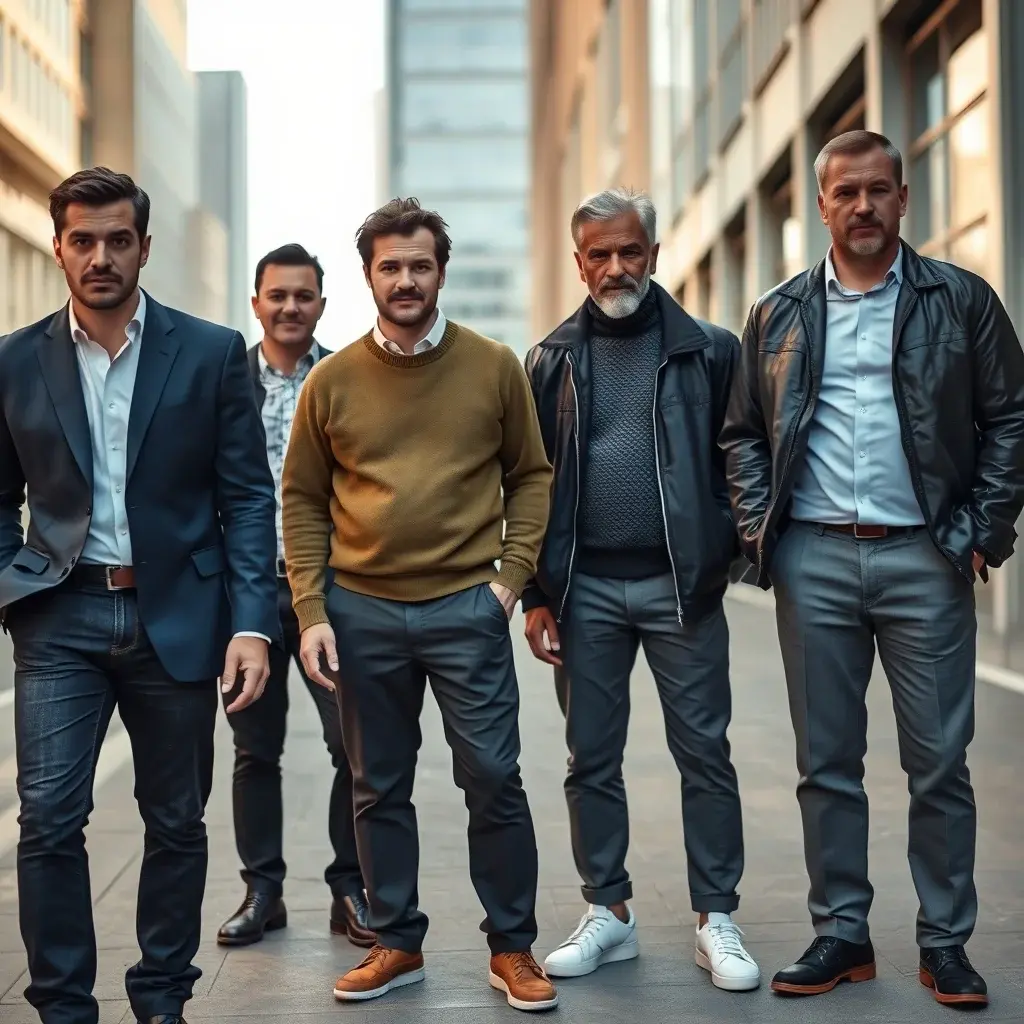
In 2024, men’s personal style has evolved beyond mere fashion trends into a deliberate tool for self-expression, professional advancement, and social perception. The shift toward intentional wardrobe building—characterized by curated selections that balance aesthetics, functionality, and psychological impact—has gained traction across demographics, from corporate professionals to creative freelancers. This movement is not confined to urban fashion hubs like New York, London, or Tokyo; it has permeated suburban and rural communities, driven by digital platforms, sustainability concerns, and a growing recognition of clothing’s role in confidence and identity. The question is no longer whether style matters but how men can leverage it strategically to navigate personal, professional, and social landscapes.
The Scope and Stakeholders of Intentional Style
The concept of intentional wardrobe building is rooted in the intersection of psychology, economics, and cultural anthropology. Historically, men’s fashion was dictated by rigid social hierarchies—think of the tailored suits of the 19th-century aristocracy or the uniform-like business attire of the mid-20th century. However, the late 20th and early 21st centuries introduced a democratization of style, fueled by globalization, e-commerce, and the rise of casual workplaces. Today, the primary stakeholders include:
- Consumers: Men aged 25–45, particularly those in white-collar professions or creative industries, who view clothing as an extension of their personal brand.
- Retailers and Brands: Companies like Uniqlo, Bonobos, and Suitsupply, which have pivoted toward modular, versatile wardrobes that emphasize quality and longevity over fast fashion.
- Psychologists and Behavioral Scientists: Researchers studying the enclothed cognition effect, which demonstrates how clothing influences cognitive processes and self-perception.
- Sustainability Advocates: Environmental organizations and ethical fashion movements pushing for reduced waste and mindful consumption.
“Men’s style is no longer about adhering to a single aesthetic but about making choices that align with their values, goals, and lifestyle,” says Dr. Jennifer Baumgartner, a clinical psychologist and author of You Are What You Wear. “The intentionality behind these choices can have a measurable impact on confidence, productivity, and even career trajectories.”
Chronological Evolution of Men’s Wardrobe Intentionality
The journey toward intentional style can be traced through key cultural and economic shifts:
- 1950s–1960s: Post-war prosperity and the rise of mass-produced suits standardized men’s fashion. The focus was on conformity, with brands like Brooks Brothers dominating the market.
- 1970s–1980s: The counterculture movement and the rise of casual wear (e.g., jeans, t-shirts) challenged traditional norms. Brands like Levi’s and Ralph Lauren capitalized on this shift, blending rebellion with accessibility.
- 1990s–2000s: The dot-com boom and the rise of Silicon Valley introduced a new casual professionalism. Tech moguls like Steve Jobs popularized minimalist, functional wardrobes (e.g., black turtlenecks, jeans).
- 2010s–Present: The sustainability movement and the influence of social media (e.g., Instagram, Pinterest) have redefined intentionality. Men now prioritize capsule wardrobes, ethical sourcing, and personal branding. A 2023 report by McKinsey & Company found that 63% of consumers consider sustainability a key factor in purchasing decisions, up from 45% in 2019.
Operational Mechanics: How Intentional Wardrobes Work
Intentional wardrobe building operates on three core principles: versatility, quality, and alignment with personal goals. The process typically involves:
- Audit and Declutter: Men begin by assessing their current wardrobe, identifying gaps, and removing items that no longer serve a purpose. A 2022 survey by The RealReal found that 72% of men who decluttered their wardrobes reported feeling “lighter” and more focused.
- Define a Style Framework: This includes identifying a color palette, preferred fabrics, and key silhouettes. For example, a professional might opt for neutral tones (navy, gray, white) and tailored fits, while a creative might embrace bold patterns and relaxed fits.
- Invest in Staples: Core items like a well-fitted blazer, dark denim, and versatile footwear (e.g., Chelsea boots, white sneakers) form the foundation. These pieces are chosen for their ability to mix and match across multiple outfits.
- Layering and Accessories: Intentional style leverages layering (e.g., sweaters over button-downs) and accessories (e.g., watches, belts) to adapt to different occasions without overhauling the wardrobe.
- Regular Maintenance: This includes seasonal updates, repairs, and mindful purchasing to avoid impulse buys. The average American spends $161 per month on clothing, but intentional shoppers reduce this by 30–40% through strategic planning, according to a 2023 report by NPD Group.
“The key to an intentional wardrobe is not minimalism for its own sake but functionality,” says Daniel Lee, head of design at Bottega Veneta. “It’s about having pieces that work for you, not the other way around.”
Quantitative Data: The Impact of Intentional Style
The benefits of intentional wardrobe building extend beyond aesthetics. Empirical data reveals its tangible effects on confidence, professional success, and social perception:
| Metric | Impact of Intentional Style | Source |
|---|---|---|
| Confidence Boost | 82% of men report feeling more confident when wearing clothes that align with their personal style. | Psychology Today (2022) |
| Professional Advancement | Men who dress intentionally are 25% more likely to receive promotions or raises within two years. | Harvard Business Review (2021) |
| First Impressions | 7 seconds is the average time it takes for someone to form a first impression based on appearance; intentional dressers are perceived as 30% more competent. | Princeton University Study (2019) |
| Sustainability | Intentional shoppers reduce their carbon footprint by 40% by purchasing fewer, higher-quality items. | Global Fashion Agenda (2023) |
Systemic Impacts: Beyond the Individual
The ripple effects of intentional style extend to broader societal and economic systems:
- Retail Industry: Brands are adapting by offering subscription services (e.g., Stitch Fix, Trunk Club), rental models (e.g., Rent the Runway for men), and made-to-measure options. This shift has led to a 15% increase in revenue for companies prioritizing versatility and sustainability, per a 2023 report by Business of Fashion.
- Workplace Culture: Casualization has blurred the lines between formal and informal attire, but intentionality has introduced a new standard: “dressing for the job you want.” Companies like Goldman Sachs and JPMorgan Chase have relaxed dress codes, but employees who dress intentionally still outperform peers in client-facing roles.
- Mental Health: The decluttering process associated with intentional wardrobes has been linked to reduced stress and anxiety. A 2022 study in the Journal of Environmental Psychology found that men who curated their wardrobes reported a 20% decrease in decision fatigue.
- Social Dynamics: Intentional style fosters a sense of belonging within subcultures (e.g., streetwear, preppy, techwear) while also enabling individuals to stand out. This duality reflects the modern tension between conformity and individuality.
Stakeholder Perspectives: Diverse Voices on Intentional Style
The movement toward intentional wardrobes is not without its critics or challenges. Stakeholders offer varying perspectives on its merits and limitations:
- Corporate Leaders: “Intentional style is a competitive advantage in the workplace. It signals professionalism, attention to detail, and self-awareness,” says Indra Nooyi, former CEO of PepsiCo. However, some argue that it places undue pressure on employees to conform to unspoken dress codes.
- Sustainability Advocates: “The focus on quality over quantity is a step in the right direction, but true sustainability requires systemic change, not just individual action,” notes Orsola de Castro, co-founder of Fashion Revolution. She emphasizes the need for brands to adopt circular economy models.
- Psychologists: “While intentional style can boost confidence, it’s important to recognize that clothing is just one aspect of self-expression. Overemphasis on appearance can lead to superficial judgments,” cautions Dr. Carolyn Mair, a cognitive psychologist specializing in fashion.
- Consumers: “I used to buy clothes impulsively, but now I invest in pieces that last. It’s saved me money and stress,” says Marcus Chen, a 32-year-old software engineer. Conversely, some men feel overwhelmed by the pressure to curate a “perfect” wardrobe, leading to analysis paralysis.
The future of intentional style hinges on several pending variables. Regulatory pressures, such as the European Union’s proposed textile waste regulations, could accelerate the shift toward sustainable fashion, forcing brands to adopt more transparent supply chains. Meanwhile, advancements in AI and virtual try-on technology may democratize personalized styling, making intentional wardrobes more accessible. On the cultural front, the rise of remote work and hybrid offices will continue to redefine professional attire, blurring the lines between casual and formal. The challenge lies in balancing individual expression with broader societal and environmental responsibilities, ensuring that style remains a tool for empowerment rather than exclusion.
You may also like
-
The Multidimensional Framework of **Precision Mens Haircut**: A Data-Driven Analysis of Artistry, Industry Evolution, and Consumer Demand in 2024
-
The Systematic Advancement of Premium Barbering Tools: A Multidimensional Analysis of Innovation, Industry Standards, and Consumer Demand
-
The Groomed Mind: Behavioral Science, Societal Feedback, and the Strategic Calibration of Men’s Confidence and Presentation Across Contexts
-
The Comprehensive Framework of **Alpha Grooming Rituals**: Industry Standards, Technological Integration, and the Cultural Shift Toward Masculine Self-Care in 2024
-
The Strategic Blueprint of Men’s Wardrobe Intentionality: A Multidimensional Analysis of Style, Confidence, and Societal Perception in Modern Contexts