
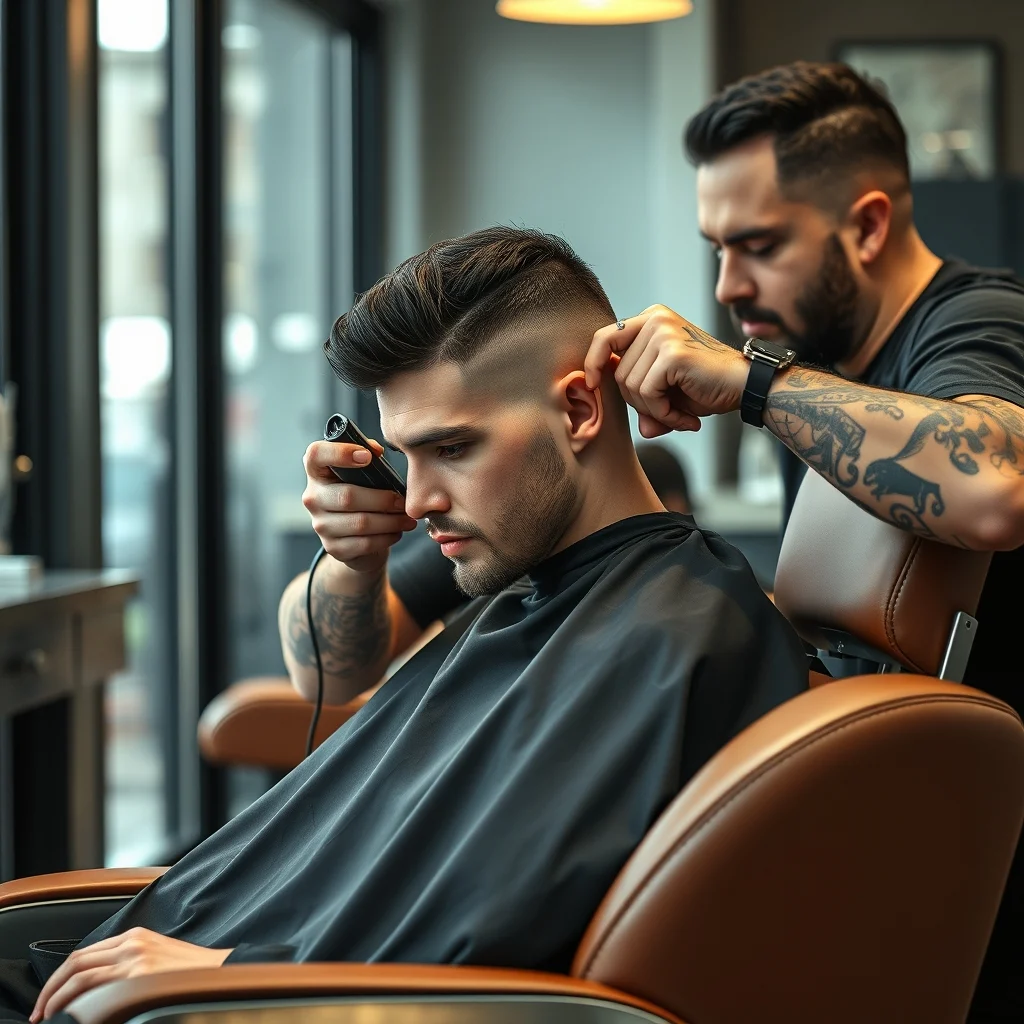
In 2024, masculine hair design has transcended its functional origins to become a cornerstone of personal identity, professional presentation, and cultural expression. No longer confined to basic trims or utilitarian cuts, the discipline now blends precision engineering with artistic flair, catering to a demographic that views grooming as an extension of self-mastery. Barbershops, once relegated to neighborhood corners, have evolved into high-touch studios where clients seek not just a haircut but a curated experience—one that aligns with their lifestyle, career demands, and aesthetic aspirations. This shift reflects broader societal changes, including the normalization of male self-care, the rise of remote work, and the increasing influence of social media on grooming standards.
The current landscape of masculine hair design is defined by three key dynamics: the democratization of premium grooming, the fusion of traditional techniques with modern innovation, and the growing demand for hyper-personalized services. According to a 2023 report by Grand View Research, the global men’s grooming market is projected to reach $115.3 billion by 2030, with hair design accounting for nearly 30% of the sector’s growth. This expansion is driven by a confluence of factors, including the proliferation of specialty barbershops, the mainstreaming of beard culture, and the increasing purchasing power of millennial and Gen Z consumers, who prioritize experiential spending over material goods.
The Historical Trajectory of Masculine Hair Design
The evolution of masculine hair design can be traced through distinct cultural and technological milestones. In the early 20th century, barbering was a utilitarian trade, with styles dictated by practicality and social norms. The 1920s introduced the slicked-back undercut, a symbol of sophistication among urban elites, while the 1950s popularized the pompadour, immortalized by icons like Elvis Presley. The 1980s and 1990s saw a shift toward minimalism, with the rise of the buzz cut and crew cut as staples of corporate and military aesthetics.
The 21st century, however, has been marked by a renaissance in barbering, fueled by several key developments:
- 2008-2012: The resurgence of traditional barbershops, driven by the hipster subculture and a nostalgia for analog craftsmanship. Establishments like Fellow Barber in New York and The Barbershop Club in London redefined the space as a hub for community and ritual.
- 2013-2017: The beard boom, catalyzed by celebrities like Chris Hemsworth and Jason Momoa, which elevated beard grooming to an art form. This period saw the emergence of specialized tools, such as precision trimmers and beard oils, and the rise of competitions like the World Beard and Moustache Championships.
- 2018-2022: The integration of technology, including augmented reality (AR) styling apps and AI-driven consultations, which allowed clients to visualize cuts before committing. Brands like Wahl and Andis introduced smart clippers with Bluetooth connectivity, enabling barbers to track usage patterns and optimize performance.
- 2023-Present: The era of hyper-personalization, where data analytics and client profiling inform every aspect of the grooming experience. Barbershops now offer subscription-based services, virtual consultations, and even DNA-based haircare recommendations, blurring the line between grooming and wellness.
The Mechanics of Modern Masculine Hair Design
At its core, masculine hair design is a blend of technical precision and creative intuition. The process begins with a consultation, where barbers assess factors such as face shape, hair texture, lifestyle, and personal style. This dialogue is critical; a 2022 survey by the Professional Beauty Association found that 78% of men prioritize a barber’s ability to listen and adapt over technical skill alone. The consultation is followed by a multi-step execution, which typically includes:
- Sectioning: Dividing the hair into manageable zones to ensure even cutting and styling. This step is particularly important for complex designs, such as fades or undercuts.
- Cutting: Using a combination of scissors, clippers, and razors to achieve the desired shape. Precision tools, like the Wahl Magic Clip or the Andis Master, allow for seamless transitions between lengths, a hallmark of modern masculine hair design.
- Styling: Applying products such as pomades, clays, or waxes to enhance texture and hold. The choice of product depends on the client’s hair type and desired finish—matte for a natural look, high-shine for a polished appearance.
- Finishing: Detailing the hairline, sideburns, and neckline with a straight razor for a crisp, clean edge. This step, often referred to as “edging,” is what distinguishes a professional cut from a DIY trim.
“The difference between a good haircut and a great one lies in the details,” says Marcus Johnson, a master barber and educator at the American Barber Association. “It’s not just about removing hair; it’s about sculpting a look that complements the client’s features and lifestyle. A well-executed fade, for example, can make a round face appear more angular, while a textured crop can add volume to fine hair.”
Quantitative Insights: Market Trends and Consumer Behavior
The masculine hair design industry is supported by a robust ecosystem of products, services, and digital platforms. Below is a snapshot of key metrics and trends shaping the sector in 2024:
| Metric | 2020 | 2024 | Projected 2027 | Source |
|---|---|---|---|---|
| Global men’s grooming market size (USD billion) | 60.2 | 89.5 | 115.3 | Grand View Research |
| Percentage of men who visit a barber at least once a month | 42% | 61% | 73% | Statista |
| Average spend per barbershop visit (USD) | 35 | 52 | 65 | IBISWorld |
| Growth rate of specialty barbershops (YoY) | 3.2% | 8.7% | 12.1% | Nielsen |
| Adoption rate of AR styling apps among men aged 18-35 | 12% | 45% | 70% | McKinsey & Company |
Consumer behavior has also shifted dramatically. A 2023 study by Nielsen revealed that 68% of men now consider their hairstyle a reflection of their personal brand, up from 45% in 2018. This mindset has led to increased demand for bespoke services, such as:
- Signature Cuts: Custom-designed hairstyles tailored to an individual’s facial structure and lifestyle, often documented in a digital portfolio for future reference.
- Grooming Subscriptions: Monthly or quarterly packages that include haircuts, beard trims, and skincare consultations. Companies like Dollar Shave Club and Harry’s have expanded into this space, offering tiered memberships that cater to different budgets.
- Virtual Consultations: Pre-appointment video calls with barbers to discuss style preferences and technical constraints. This service has gained traction among remote workers and frequent travelers.
Systemic Impacts: Cultural, Economic, and Social Dimensions
The rise of masculine hair design has had far-reaching implications beyond the barbershop. Culturally, it has challenged traditional notions of masculinity, normalizing self-care as a masculine pursuit. A 2022 report by the Pew Research Center found that 56% of men under 30 now view grooming as an essential part of their identity, compared to 34% of men over 50. This generational divide underscores the shifting attitudes toward male aesthetics, with younger cohorts embracing grooming as a form of self-expression rather than vanity.
Economically, the industry has become a significant job creator. The U.S. Bureau of Labor Statistics projects that employment for barbers, hairstylists, and cosmetologists will grow by 19% from 2022 to 2032, outpacing the average for all occupations. This growth is driven by the proliferation of barbershops in urban centers and the increasing demand for mobile grooming services, which cater to clients with busy schedules. Additionally, the industry has become a launchpad for entrepreneurship, with many barbers opening their own shops or launching product lines. According to a 2023 survey by the National Association of Barbers, 42% of barbers aspire to own their own business within five years.
Socially, barbershops have reemerged as vital community spaces, particularly in underserved neighborhoods. “Barbershops have always been more than just places to get a haircut,” says Dr. Alfreda Harris, a sociologist at Howard University who studies urban masculinity. “They serve as informal counseling centers, networking hubs, and safe spaces for men to discuss everything from relationships to financial literacy. In many communities, the barbershop is the last bastion of analog social interaction in an increasingly digital world.”
Stakeholder Perspectives: Conflicting Priorities and Shared Goals
The masculine hair design industry is shaped by a diverse array of stakeholders, each with distinct priorities and pain points. Below are key perspectives from across the sector:
Barbers and Stylists: For professionals, the primary challenges include rising operational costs, competition from chain salons, and the need for continuous education. “The barbering industry is evolving at a breakneck pace,” says Elena Martinez, a master stylist and educator at the London School of Barbering. “Clients expect us to be experts in everything from textured crops to skin fades, and the pressure to stay ahead of trends is immense. Many of us are investing in advanced training, but the cost can be prohibitive for independent barbers.”
Clients: Consumers are increasingly discerning, prioritizing convenience, personalization, and hygiene. A 2023 survey by Mintel found that 54% of men would switch barbers if they felt their current provider was not adhering to strict sanitation protocols. Additionally, younger clients are driving demand for sustainable practices, such as the use of eco-friendly products and water-saving techniques. “I don’t just want a haircut; I want an experience,” says James Carter, a 28-year-old marketing professional. “I look for barbers who use organic products, offer digital check-ins, and remember my preferences. It’s about feeling seen and valued.”
Product Manufacturers: Brands are under pressure to innovate while maintaining affordability. The rise of direct-to-consumer (DTC) models has disrupted traditional retail channels, forcing legacy brands like Wahl and Andis to adapt. “The DTC space has democratized access to premium grooming tools,” says Raj Patel, CEO of a leading men’s grooming brand. “But it’s also created a race to the bottom in terms of pricing. Our challenge is to educate consumers about the value of quality tools while staying competitive.”
Regulators and Industry Associations: Policymakers are grappling with the need to modernize licensing requirements and ensure consumer safety. In 2023, the American Barber Association lobbied for standardized sanitation guidelines across all 50 states, citing inconsistencies in local regulations. “The lack of uniformity in licensing and sanitation standards is a major concern,” says Michael Thompson, president of the National Association of Barbers. “We’re working with state boards to create a framework that protects both barbers and clients, but progress is slow.”
Pending Variables and Future Catalysts
The trajectory of masculine hair design will be influenced by several pending variables, including regulatory changes, technological advancements, and shifting consumer expectations. One of the most significant catalysts is the integration of artificial intelligence (AI) into the grooming process. Companies like Perfect Corp and ModiFace are developing AI-powered tools that analyze facial features, hair texture, and skin tone to recommend personalized styles. These technologies could democratize access to expert-level grooming advice, but they also raise questions about data privacy and the potential erosion of human artistry.
Another critical factor is the growing emphasis on sustainability. As consumers become more environmentally conscious, barbershops are under pressure to adopt green practices, such as using biodegradable products, reducing water waste, and sourcing tools from ethical manufacturers. A 2023 report by Nielsen found that 62% of men aged 18-34 are willing to pay a premium for sustainable grooming services, signaling a lucrative opportunity for businesses that prioritize eco-friendly practices.
Finally, the industry’s future will be shaped by its ability to adapt to the needs of an increasingly diverse clientele. The rise of gender-neutral grooming spaces, the growing demand for cultural competency among barbers, and the normalization of grooming for men of all ages and backgrounds are trends that will define the next decade. “The barbershop of the future will be a space where everyone feels welcome,” says Dr. Harris. “It’s not just about cutting hair; it’s about creating a sense of belonging. The shops that succeed will be the ones that embrace this ethos.”
For men seeking to elevate their grooming routine, the key lies in finding a barber who understands their unique needs and can translate their vision into reality. Whether it’s a sharp fade, a sculpted beard, or a classic taper, the right haircut can serve as a foundation for confidence, professionalism, and self-expression. The tools and techniques may evolve, but the essence of masculine hair design—artistry, precision, and personal connection—remains timeless.
You may also like
-
JSON-LD for Beauty Brands: A Practical Guide to Search Visibility
-
The Multidimensional Framework of **Precision Mens Haircut**: A Data-Driven Analysis of Artistry, Industry Evolution, and Consumer Demand in 2024
-
The Systematic Advancement of Premium Barbering Tools: A Multidimensional Analysis of Innovation, Industry Standards, and Consumer Demand
-
The Groomed Mind: Behavioral Science, Societal Feedback, and the Strategic Calibration of Men’s Confidence and Presentation Across Contexts
-
The Comprehensive Framework of **Alpha Grooming Rituals**: Industry Standards, Technological Integration, and the Cultural Shift Toward Masculine Self-Care in 2024