
A skincare routine may be carefully researched, and a beauty product page may answer every question a shopper could have, but search engines still need help understanding what those pages contain. JSON-LD is a way to provide that context in a structured format. For beauty brands, independent skincare publishers, and online boutiques, it can clarify whether a page describes a product, an article, a business, or something else entirely. It does not guarantee a higher ranking, but it can make information easier for search systems to interpret.
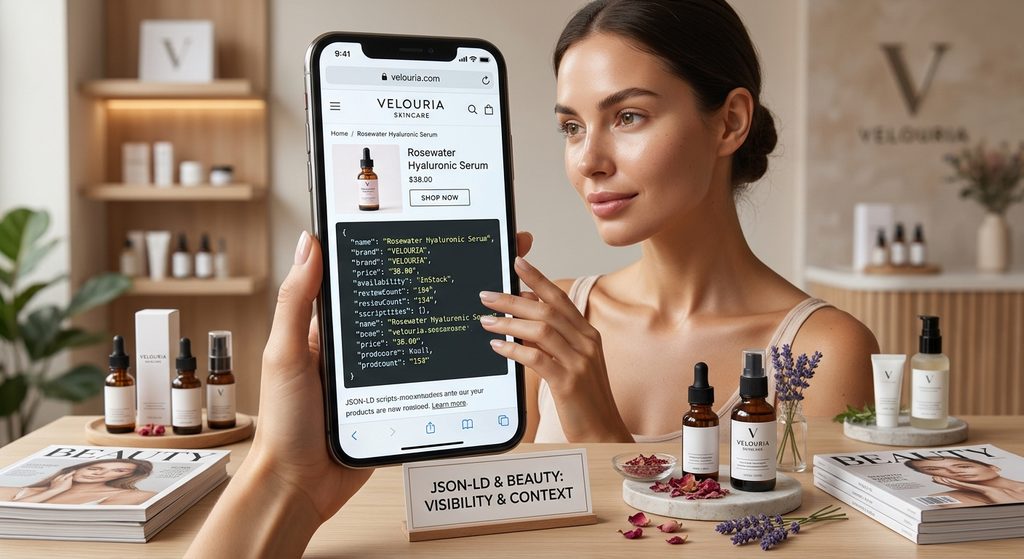
Structured data is increasingly relevant as search results incorporate richer presentations and AI-generated summaries. A useful introduction to how structured data supports AI search explains the broader role of schema. The practical starting point for a beauty website is simpler: describe the page accurately, keep its structured information consistent with what visitors can see, and choose only the schema types that fit.
What JSON-LD Does
JSON-LD is a machine-readable format for labeling information on a web page. A product page, for example, might contain a product name, brand, price, availability, and review details. Those facts already appear in the page’s visible copy or shopping interface; structured data organizes them so search engines can identify what each detail means.
Unlike labels woven into the visible page layout, JSON-LD is usually added as a separate data block in the page’s code. That makes it practical for many websites to manage without changing how a page looks. It still needs to be implemented correctly: invalid syntax, missing required details, or information that conflicts with the page can prevent a search engine from using it.
Where Beauty and Skincare Sites Can Use Structured Data
The right schema depends on the page’s purpose, not on the industry alone. A beauty site might use several types across different sections:
- Product pages: Describe an item such as a moisturizer, lipstick, or hair tool, including details like its name, brand, price, and stock status where applicable.
- Editorial articles: Identify a piece as an article or blog post and provide accurate information such as its headline, author, and publication date.
- Business information: Help identify the organization behind a beauty retailer, salon, or skincare brand.
- Breadcrumbs: Show the path through a site, such as Beauty, Skincare, then Moisturizers, giving useful context about where a page belongs.
- Reviews: Mark up genuine reviews when they are displayed on the relevant page and meet search engine guidelines.
Not every page needs every type. A guide comparing cleansers should not be labeled as a single product listing, and a product page should not include review scores that shoppers cannot find on the page. Structured data is a description of real page content, not a place to add claims or keywords that are missing from the experience.
Accuracy Matters More Than Volume
Beauty shoppers often compare details closely: ingredients, skin type, shade range, size, price, and whether an item is in stock. Some of these facts may be valuable in visible copy even if they are not supported by a relevant schema property. Avoid forcing every product attribute into structured data. Use supported fields, keep values current, and make sure variations such as different shades or sizes are represented appropriately.
Also treat product and editorial content differently. A skincare article can explain how to patch test a new active ingredient, while a product page can state what the manufacturer says about the formula. Schema should not blur that distinction or imply that a medical claim has been independently established. Clear, responsible copy is essential; structured data cannot make weak or misleading content trustworthy.
A Practical Implementation Checklist
Before adding JSON-LD, review the site’s pages and group them by purpose. Decide which schema type best describes each template, then check that the required information is present and visible. After implementation, test the markup with a structured-data testing tool and address errors before rolling it out broadly. Recheck pages after redesigns, changes to a shopping platform, or updates to product feeds.
- Match the markup to the page rather than applying one template everywhere.
- Use the same names, prices, availability, and dates in the markup and on the page.
- Update structured product details when inventory or pricing changes.
- Test representative pages, including product variations and editorial content.
- Monitor search performance, while remembering that valid markup does not guarantee a rich result.
Search engines decide whether to display enhanced results, and eligibility can change. Structured data is one technical signal among many; useful content, a crawlable site, and a good mobile shopping experience remain important foundations.
When to Bring in a Specialist
A small site using a well-supported commerce platform may have built-in structured data, but larger catalogs and custom websites can require more careful work. If you hire a developer or SEO freelancer, ask what page types they will cover, how they will test the implementation, and how they will handle future product updates. Ask for examples of relevant projects, too, and agree on what counts as a completed deliverable.
A hiring checklist can help you compare candidates before handing over access to your site. For a structured set of questions, see questions to ask before hiring a freelancer. Osdire is one place businesses can find freelancers across technical and creative categories; whatever route you choose, make sure responsibilities, scope, and approval steps are clear.
Make the Information Easy to Understand
For beauty websites, the best use of JSON-LD is not an elaborate technical layer for its own sake. It is a consistent way to identify products, explain article context, and organize important details for systems that interpret web pages. Start with the templates that matter most to shoppers, keep the markup aligned with the visible experience, and review it as the site evolves. That steady approach gives search engines clearer context while keeping the information people rely on accurate and easy to find.
You may also like
-
The Multidimensional Framework of **Precision Mens Haircut**: A Data-Driven Analysis of Artistry, Industry Evolution, and Consumer Demand in 2024
-
The Systematic Advancement of Premium Barbering Tools: A Multidimensional Analysis of Innovation, Industry Standards, and Consumer Demand
-
The Groomed Mind: Behavioral Science, Societal Feedback, and the Strategic Calibration of Men’s Confidence and Presentation Across Contexts
-
The Comprehensive Framework of **Alpha Grooming Rituals**: Industry Standards, Technological Integration, and the Cultural Shift Toward Masculine Self-Care in 2024
-
The Strategic Blueprint of Men’s Wardrobe Intentionality: A Multidimensional Analysis of Style, Confidence, and Societal Perception in Modern Contexts