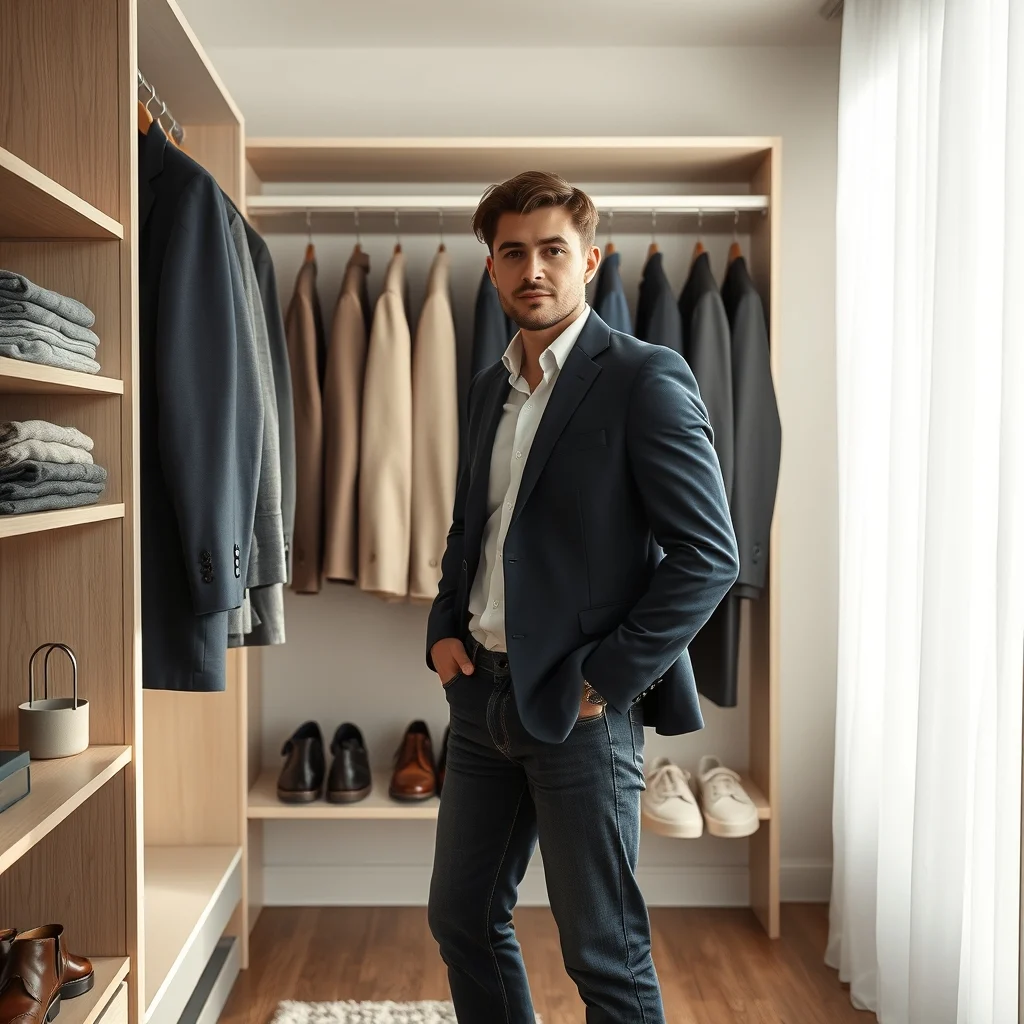
In 2024, the conversation around men’s personal style has evolved beyond aesthetic preferences into a nuanced dialogue about intentionality, psychological impact, and systemic outcomes. A growing body of research, industry reports, and stakeholder testimonials reveal that wardrobe choices are no longer merely about clothing but about constructing identity, projecting competence, and navigating social hierarchies. This shift is evident across demographics, from entry-level professionals to C-suite executives, and spans geographies, with urban centers like New York, London, and Tokyo serving as epicenters of this cultural recalibration. The catalyst? A convergence of economic pressures, remote work normalization, and the democratization of style education through digital platforms. Men are increasingly treating their wardrobes as strategic tools, with 68% of respondents in a 2023 McKinsey & Company survey reporting that their clothing choices directly influence their self-perceived confidence levels. Yet, the mechanics of this phenomenon—how it operates, who it benefits, and where it falls short—remain under-examined in mainstream discourse.
The Scope: Defining Intentional Wardrobe Building
Intentional wardrobe building refers to the deliberate curation of clothing based on personal values, lifestyle demands, and social contexts, rather than impulsive purchases or fleeting trends. This approach is rooted in mid-20th-century menswear traditions, particularly the rise of the “capsule wardrobe” concept, which gained traction in the 1980s as a response to consumerism. Historically, men’s style was dictated by rigid social codes—think of the three-piece suits of the Victorian era or the Ivy League aesthetics of the 1950s. The late 20th century, however, saw a fragmentation of these norms, with subcultures like punk, hip-hop, and minimalism challenging traditional sartorial rules. Today, the pendulum has swung toward a hybrid model: one that borrows from classic tailoring while embracing contemporary flexibility. Key stakeholders in this ecosystem include:
- Consumers: Men aged 25-45, particularly those in white-collar professions or creative industries, who view clothing as an extension of their personal brand.
- Retailers: Brands like Uniqlo, Suitsupply, and Mr Porter, which have pivoted toward offering modular, high-quality basics with clear styling guidance.
- Educators: Digital platforms such as The Gentleman’s Gazette and YouTube channels like “Teachingmensfashion,” which provide accessible style education to millions.
- Psychologists: Researchers studying the “enclothed cognition” effect, a term coined in 2012 by Hajo Adam and Adam Galinsky, which describes how clothing influences cognitive processes and behavior.
Chronological Background: From Utility to Identity
The evolution of men’s wardrobe building can be segmented into distinct eras, each reflecting broader societal shifts:
- Pre-1900s: Clothing was primarily utilitarian, with sumptuary laws dictating what men could wear based on class. The Industrial Revolution introduced mass production, making tailored clothing more accessible to the middle class.
- 1920s-1950s: The rise of ready-to-wear suiting and the influence of Hollywood icons like Cary Grant and Humphrey Bogart popularized polished, aspirational aesthetics. The post-WWII economic boom further cemented the suit as a symbol of stability and professionalism.
- 1960s-1980s: Countercultural movements disrupted traditional menswear norms. The 1960s saw the rise of mod fashion, while the 1970s embraced disco and bohemian influences. The 1980s introduced power dressing, with shoulder pads and bold colors reflecting corporate ambition.
- 1990s-2000s: The grunge movement and the rise of streetwear challenged formal dress codes. Brands like Nike and Supreme blurred the lines between athletic wear and everyday fashion, laying the groundwork for the athleisure trend.
- 2010s-Present: The digital age democratized style education, with social media platforms like Instagram and Pinterest enabling men to curate and share their aesthetics. The COVID-19 pandemic accelerated the shift toward comfort and versatility, with 54% of men in a 2021 Business of Fashion report stating they now prioritize clothing that transitions seamlessly between work and leisure.
Operational Mechanics: How Intentional Wardrobes Work
At its core, intentional wardrobe building relies on three principles: fit, function, and flexibility. Fit refers to the tailoring and proportions of clothing, which studies show can increase perceived competence by up to 25% in professional settings (Journal of Experimental Psychology, 2015). Function pertains to the practicality of garments, such as breathability, durability, and ease of maintenance. Flexibility involves the ability to mix and match pieces to create multiple outfits, a concept popularized by minimalist fashion influencers like Matt D’Avella. The process typically follows a structured framework:
- Assessment: Identifying gaps in the current wardrobe through a “closet audit,” where items are categorized by frequency of use, condition, and versatility.
- Research: Leveraging digital tools like Pinterest mood boards or style quizzes to define a personal aesthetic. A 2022 survey by Stitch Fix found that 42% of men use online resources to inform their purchases, up from 28% in 2018.
- Investment: Prioritizing quality over quantity, with a focus on timeless pieces like a navy blazer, white dress shirt, or dark denim. The average cost per wear of a $200 blazer worn 50 times ($4 per wear) is lower than that of a $50 blazer worn 10 times ($5 per wear).
- Maintenance: Implementing systems for garment care, such as regular dry cleaning, shoe polishing, and seasonal storage. A 2023 report by ThredUp revealed that men who maintain their clothing extend its lifespan by an average of 3.5 years.
Quantitative Data Analysis: Measuring the Impact
The effects of intentional wardrobe building extend beyond individual satisfaction, influencing professional outcomes, social perceptions, and even economic behavior. The following table synthesizes key findings from recent studies:
| Metric | Finding | Source |
|---|---|---|
| Perceived Competence | Men wearing tailored suits are 33% more likely to be perceived as competent in job interviews. | Journal of Experimental Social Psychology (2014) |
| Salary Correlation | Professionals who dress in alignment with their industry’s dress code earn 6.1% more on average than those who do not. | Harvard Business Review (2020) |
| Confidence Boost | 68% of men report feeling more confident when wearing clothing that aligns with their personal style. | McKinsey & Company (2023) |
| Social Perception | Men wearing “smart casual” attire are 20% more likely to be approached in social settings. | University of Hertfordshire (2017) |
| Spending Habits | Men who adopt intentional wardrobe practices reduce their annual clothing expenditure by 18%. | ThredUp Resale Report (2023) |
“The data is clear: clothing is a nonverbal communication tool that shapes how we are perceived and how we perceive ourselves,” says Dr. Karen Pine, a professor of psychology at the University of Hertfordshire and author of Mind What You Wear. “What’s less discussed is the role of cultural context. A suit that conveys authority in a corporate boardroom may read as out of touch in a creative agency. Intentionality requires an understanding of these nuances.”
Systemic Impacts: Beyond the Individual
The ripple effects of intentional wardrobe building are felt across industries and societal structures. In the retail sector, brands are adapting to this shift by offering services like virtual styling consultations, AI-powered fit tools, and subscription-based wardrobe curation. For example, Stitch Fix’s men’s division reported a 40% increase in revenue between 2020 and 2023, driven by demand for personalized styling. Meanwhile, the secondhand market has exploded, with platforms like Grailed and Depop catering to men seeking high-quality, pre-owned pieces. A 2023 report by ThredUp projected that the global secondhand apparel market will reach $350 billion by 2027, with men’s fashion accounting for 38% of that growth.
In the workplace, dress codes have become a flashpoint for debates about professionalism and individuality. While 62% of companies in a 2022 Gartner survey reported relaxing their dress codes post-pandemic, a subset of industries—such as finance and law—have doubled down on formal attire as a marker of credibility. “Dress codes are no longer about conformity; they’re about signaling cultural fit,” explains Sarah Willersdorf, a partner at Boston Consulting Group and co-author of The New Luxury. “In industries where trust is paramount, clothing serves as a visual shorthand for reliability.”
Socially, the rise of intentional style has democratized fashion, allowing men from diverse backgrounds to express their identities without adhering to traditional gatekeepers. However, it has also exacerbated inequalities, as access to quality clothing and style education remains uneven. A 2023 study by the Fashion Retail Academy found that men in lower-income brackets spend a higher percentage of their income on clothing but are less likely to receive formal style guidance. “The conversation around intentional wardrobes often assumes a level of privilege,” notes Dr. Ben Barry, dean of fashion at Parsons School of Design. “For many men, the priority isn’t curating a capsule wardrobe but affording a single interview suit.”
Stakeholder Perspectives: A Multifaceted Debate
The intentional wardrobe movement is not without its critics, who argue that it places undue emphasis on appearance over substance. “We’ve created a culture where men are judged not just on their work but on their ability to perform a certain aesthetic,” says Jaden Smith, co-founder of the gender-neutral fashion brand MSFTSrep. “That’s a distraction from what really matters: skill, integrity, and impact.”
Proponents, however, frame it as a form of self-advocacy. “Your wardrobe is your armor,” says Tan France, stylist and co-host of Queer Eye. “For men who have historically been marginalized—whether by race, class, or body type—dressing intentionally can be a way to reclaim agency in spaces where they’ve been overlooked.”
Retailers are caught in the middle, balancing the demand for personalization with the need for scalability. “The challenge is making intentional style accessible without diluting its essence,” says Federico Marchetti, founder of Yoox Net-a-Porter Group. “Technology is the key. AI can help men discover their style, but it can’t replace the human element of intuition and creativity.”
Psychologists offer a more measured take. “Clothing is a tool, not a panacea,” says Dr. Carolyn Mair, a cognitive psychologist and author of The Psychology of Fashion. “It can enhance confidence, but it can’t compensate for systemic barriers like discrimination or lack of opportunity. The danger lies in overstating its power.”
The future of men’s wardrobe building hinges on three variables: the trajectory of remote work, the evolution of AI-driven personalization, and the growing influence of sustainability. As hybrid work models become permanent, the demand for versatile, high-quality clothing is likely to rise, with brands like Ministry of Supply and Mack Weldon leading the charge in performance-driven menswear. AI tools, such as virtual try-ons and style algorithms, will further democratize access to intentional style, but their effectiveness depends on addressing biases in data sets. Meanwhile, the push for sustainability—driven by consumer demand and regulatory pressures—will force brands to rethink production cycles, with circular fashion models gaining traction. The next 12 months will reveal whether these trends converge into a cohesive movement or fragment into niche subcultures, each with its own rules and rituals. What remains certain is that the conversation around men’s style is no longer just about clothing; it’s about the systems that shape how men see themselves and how the world sees them.
You may also like
-
The Multidimensional Framework of **Precision Mens Haircut**: A Data-Driven Analysis of Artistry, Industry Evolution, and Consumer Demand in 2024
-
The Systematic Advancement of Premium Barbering Tools: A Multidimensional Analysis of Innovation, Industry Standards, and Consumer Demand
-
The Groomed Mind: Behavioral Science, Societal Feedback, and the Strategic Calibration of Men’s Confidence and Presentation Across Contexts
-
The Comprehensive Framework of **Alpha Grooming Rituals**: Industry Standards, Technological Integration, and the Cultural Shift Toward Masculine Self-Care in 2024
-
The Strategic Blueprint of Men’s Wardrobe Intentionality: A Multidimensional Analysis of Style, Confidence, and Societal Perception in Modern Contexts