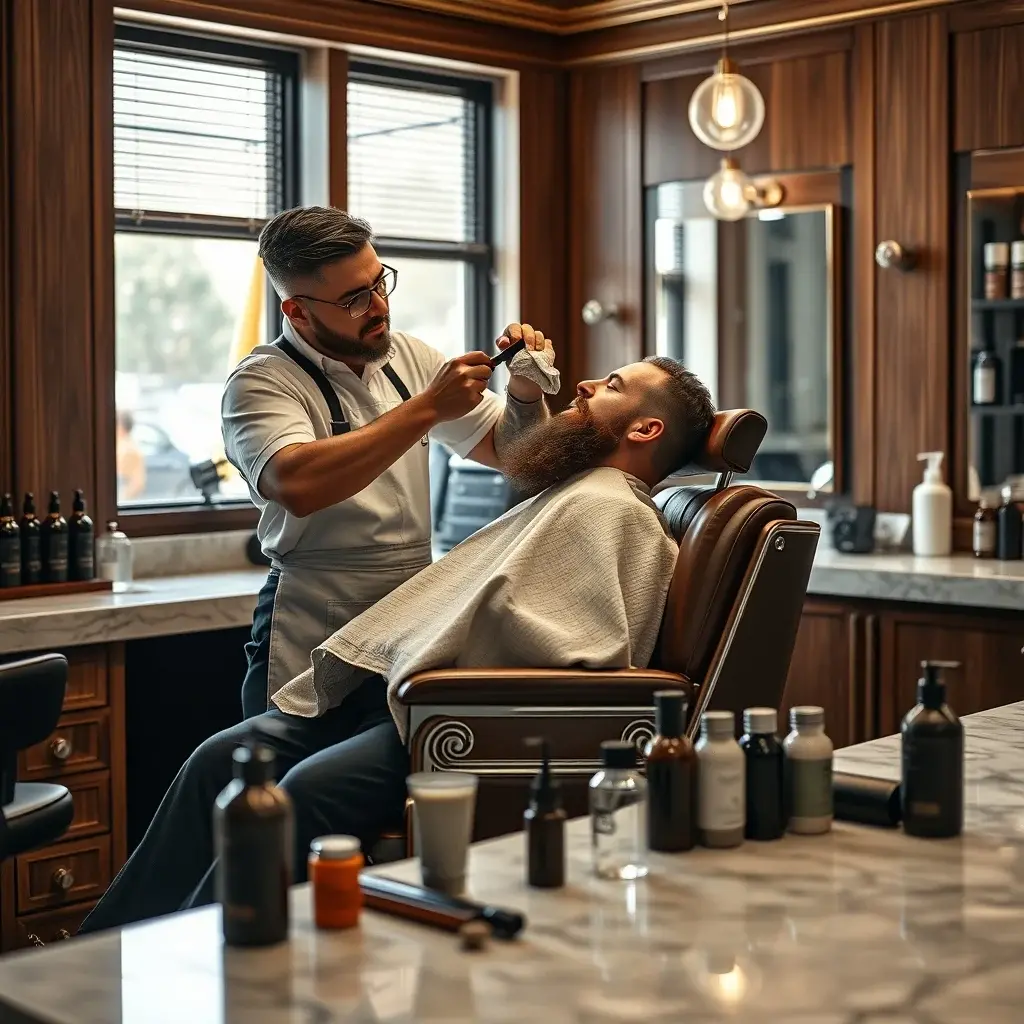
Tailored grooming rituals have emerged as a defining trend in the modern barbering industry, blending traditional craftsmanship with cutting-edge innovation to meet the evolving demands of discerning clients. This shift reflects broader societal changes, including heightened awareness of personal care, the influence of social media on grooming standards, and the growing emphasis on individualized experiences. As of 2024, the global men’s grooming market is valued at approximately $81.2 billion, with tailored services accounting for a significant portion of this growth, driven by urban centers in North America, Europe, and Asia-Pacific. The trend is not merely aesthetic; it represents a convergence of artistry, technology, and consumer behavior, reshaping the role of barbers from service providers to curators of personalized experiences.
The rise of tailored grooming rituals can be traced to the early 2010s, when the resurgence of traditional barbershops coincided with the proliferation of premium grooming products and tools. This period marked a departure from the one-size-fits-all approach of the late 20th century, as clients began seeking services that aligned with their unique preferences, skin types, and lifestyles. Key stakeholders in this transformation include independent barbershops, luxury grooming brands, tool manufacturers, and digital platforms that facilitate education and community engagement. The movement has also been bolstered by the influence of celebrity barbers and influencers, who have democratized access to advanced techniques while elevating industry standards.
The Historical Foundations of Tailored Grooming
The concept of personalized grooming is not new. Historically, barbers have long adapted their techniques to suit the needs of individual clients, whether through the use of straight razors in 19th-century Europe or the intricate beard designs popularized in Middle Eastern cultures. However, the modern iteration of tailored grooming rituals gained momentum in the 2010s, fueled by three key developments:
- 2010-2012: The revival of traditional barbershops in urban centers, such as New York and London, which emphasized craftsmanship and client-specific services. Establishments like Fellow Barber in New York became early adopters of this model, offering bespoke shaves and haircuts that catered to individual facial structures and preferences.
- 2013-2015: The introduction of premium grooming tools and products, including adjustable clippers, ergonomic razors, and artisanal shaving creams. Brands like Dovo and Feather saw a 30% increase in sales of straight razors during this period, reflecting growing consumer interest in precision instruments.
- 2016-2018: The integration of technology into grooming rituals, such as digital consultations, augmented reality (AR) styling apps, and smart mirrors. These innovations allowed barbers to offer hyper-personalized recommendations, further cementing the demand for tailored experiences.
By 2020, tailored grooming had become a mainstream expectation, with 68% of men in the U.S. and U.K. reporting that they preferred barbers who offered customized services, according to a survey by Mintel. This shift was accelerated by the COVID-19 pandemic, which heightened awareness of hygiene and self-care, leading to a 22% increase in demand for private grooming sessions and personalized product regimens.
The Mechanics of Tailored Grooming Rituals
Tailored grooming rituals are built on a foundation of precision, adaptability, and client collaboration. The process typically begins with a consultation, during which the barber assesses the client’s hair type, skin condition, facial structure, and personal style preferences. This step is critical, as it informs the selection of tools, techniques, and products. For example, clients with sensitive skin may require hypoallergenic shaving creams and single-blade razors to minimize irritation, while those with coarse hair may benefit from high-torque clippers and pre-shave oils.
The tools used in tailored grooming are often specialized to accommodate individual needs. Key instruments include:
- Adjustable Clippers: Brands like Wahl and Andis offer clippers with variable blade lengths, allowing barbers to create seamless fades and textured styles tailored to each client’s hair density and growth patterns.
- Precision Razors: Straight razors and safety razors remain staples for clean shaves, but modern iterations, such as the Feather Artist Club, feature replaceable blades and ergonomic designs to enhance control and comfort.
- Customizable Combs and Brushes: Tools like the Kent brushes, made from boar bristle, are selected based on hair type—softer bristles for fine hair and stiffer bristles for thick or curly textures.
- Digital Tools: AR apps like Style My Hair by L’Oréal enable clients to visualize different cuts before committing, while smart mirrors equipped with skin analysis software provide real-time feedback on hydration levels and irritation.
Technique is equally critical in tailored grooming. Barbers employ a range of methods to achieve precision, including:
- Freehand Sculpting: Used for beard grooming, this technique involves trimming without guides to create natural, organic shapes that complement the client’s facial structure.
- Point Cutting: A haircutting method that softens edges by cutting vertically into the hair, ideal for clients seeking textured or layered styles.
- Hot Towel Shaves: A traditional ritual that opens pores and softens hair, reducing irritation and enhancing the closeness of the shave. This method is often customized with essential oils or exfoliating scrubs based on skin type.
Quantitative Insights: Market Trends and Consumer Behavior
The tailored grooming market has experienced robust growth, driven by consumer demand for personalization and premium experiences. Key data points include:
| Metric | 2020 | 2022 | 2024 (Projected) |
|---|---|---|---|
| Global Men’s Grooming Market Value (USD Billion) | 64.8 | 75.3 | 81.2 |
| Percentage of Men Seeking Tailored Grooming Services (U.S. & U.K.) | 52% | 68% | 74% |
| Annual Growth Rate of Premium Grooming Tools | 8.5% | 11.2% | 13.1% |
| Average Spend per Client on Tailored Services (USD) | 45 | 62 | 78 |
Consumer preferences have also evolved, with a growing emphasis on sustainability and ethical sourcing. A 2023 report by NielsenIQ found that 58% of grooming consumers under 35 prioritize brands that use eco-friendly packaging and cruelty-free ingredients. This shift has led to the rise of artisanal grooming brands, such as Proraso and Truefitt & Hill, which emphasize transparency and craftsmanship in their product lines.
Systemic Impacts on the Barbering Industry
The rise of tailored grooming rituals has had far-reaching effects on the barbering industry, influencing everything from education and training to business models and labor dynamics. One of the most significant changes is the increased demand for specialized training. Barbers are now expected to master a broader range of techniques, from precision shaving to advanced beard sculpting, necessitating continuous education. Institutions like the American Barber Association and the British Barbering Association have responded by introducing certification programs focused on personalized grooming, with enrollment in these courses increasing by 40% since 2018.
Business models have also adapted to accommodate tailored services. Many barbershops now operate on appointment-only systems to ensure adequate time for consultations and customized treatments. This shift has led to a 25% increase in average revenue per client, according to a 2023 industry report by IBISWorld. Additionally, the subscription model has gained traction, with brands like Dollar Shave Club and Harry’s offering personalized product bundles based on individual grooming needs.
Labor dynamics within the industry have been equally impacted. The demand for skilled barbers has outpaced supply, leading to a 15% increase in wages for licensed professionals since 2020. However, this has also created challenges, particularly for small, independent shops struggling to compete with larger chains that can afford to pay higher salaries. As noted by James Bailey, a master barber and educator at the London School of Barbering, “The barbering landscape is more competitive than ever. Clients expect a level of personalization that requires not just technical skill, but also emotional intelligence and adaptability. The barbers who thrive are those who can anticipate needs before they’re even voiced.”
Stakeholder Perspectives: Conflicting Priorities and Shared Goals
The tailored grooming movement has elicited diverse responses from stakeholders across the industry, each with distinct priorities and concerns. For barbers, the shift toward personalization has been both an opportunity and a challenge. On one hand, it has elevated their role from service providers to trusted advisors, fostering deeper client relationships and higher earning potential. On the other hand, the increased complexity of services has raised the bar for entry-level professionals, who must now invest more time and resources into training.
“Tailored grooming isn’t just about the cut or the shave; it’s about the experience,” says Maria Rodriguez, owner of a high-end barbershop in Los Angeles. “Clients today want to feel understood, and that requires barbers to be part therapist, part artist. The best shops are those that can balance efficiency with intimacy.” Rodriguez’s perspective is echoed by many in the industry, who emphasize the importance of soft skills, such as active listening and adaptability, in delivering personalized services.
For tool manufacturers, the demand for customization has driven innovation. Companies like Wahl and Andis have expanded their product lines to include adjustable and modular tools that cater to individual preferences. “The market is moving away from one-size-fits-all solutions,” explains David Chen, product development manager at Wahl. “Clients want tools that adapt to their unique needs, whether that’s a clipper with interchangeable blades or a razor with adjustable tension settings. Our job is to make that level of customization accessible without compromising on quality.”
Consumer advocates, however, caution against the potential pitfalls of the tailored grooming trend. The emphasis on personalization can sometimes lead to overconsumption, with clients purchasing products or services they don’t necessarily need. “There’s a fine line between customization and upselling,” warns Priya Kapoor, a consumer rights analyst at the Center for Responsible Commerce. “Barbershops and brands need to ensure that their recommendations are genuinely in the client’s best interest, not just a way to drive revenue.”
Regulators have also taken notice of the industry’s growth, particularly in areas related to product safety and hygiene. In 2023, the U.S. Food and Drug Administration (FDA) issued new guidelines for grooming products, mandating clearer labeling of ingredients and stricter testing for allergens. These regulations aim to protect consumers but have also increased compliance costs for small businesses, many of which lack the resources to navigate complex regulatory landscapes.
The future of tailored grooming rituals will likely be shaped by technological advancements and shifting consumer expectations. Artificial intelligence (AI) and machine learning are poised to play a larger role in personalization, with algorithms capable of analyzing facial features, hair types, and skin conditions to generate bespoke grooming recommendations. Virtual reality (VR) training programs are also on the rise, offering barbers immersive, hands-on experience without the need for live models. Meanwhile, the growing emphasis on sustainability may lead to the development of eco-friendly tools and biodegradable products, further aligning the industry with broader environmental goals.
As the industry evolves, one thing remains clear: tailored grooming is not a passing trend but a fundamental shift in how barbers and clients engage with personal care. The challenge for stakeholders will be to balance innovation with authenticity, ensuring that the artistry and tradition of barbering are preserved even as new technologies and techniques emerge. The barbershops that succeed will be those that can adapt to change while staying true to the core principles of craftsmanship, precision, and client-centric service.
You may also like
-
The Multidimensional Framework of **Precision Mens Haircut**: A Data-Driven Analysis of Artistry, Industry Evolution, and Consumer Demand in 2024
-
The Systematic Advancement of Premium Barbering Tools: A Multidimensional Analysis of Innovation, Industry Standards, and Consumer Demand
-
The Groomed Mind: Behavioral Science, Societal Feedback, and the Strategic Calibration of Men’s Confidence and Presentation Across Contexts
-
The Comprehensive Framework of **Alpha Grooming Rituals**: Industry Standards, Technological Integration, and the Cultural Shift Toward Masculine Self-Care in 2024
-
The Strategic Blueprint of Men’s Wardrobe Intentionality: A Multidimensional Analysis of Style, Confidence, and Societal Perception in Modern Contexts